Which Results Can Your Vet Use From a Dog’s Lipemic Blood Sample?
Learn what a lipemia flag means on your dog’s bloodwork, which results your vet may still be able to use, and when a targeted repeat could help.

When a dog’s blood sample is flagged for lipemia, your veterinarian may still be able to use some results from that draw. Lipemia is cloudiness in the serum or plasma caused by triglyceride-rich particles, commonly after a meal. How much the cloudiness matters depends on the test, the laboratory’s method, and the degree of lipemia.
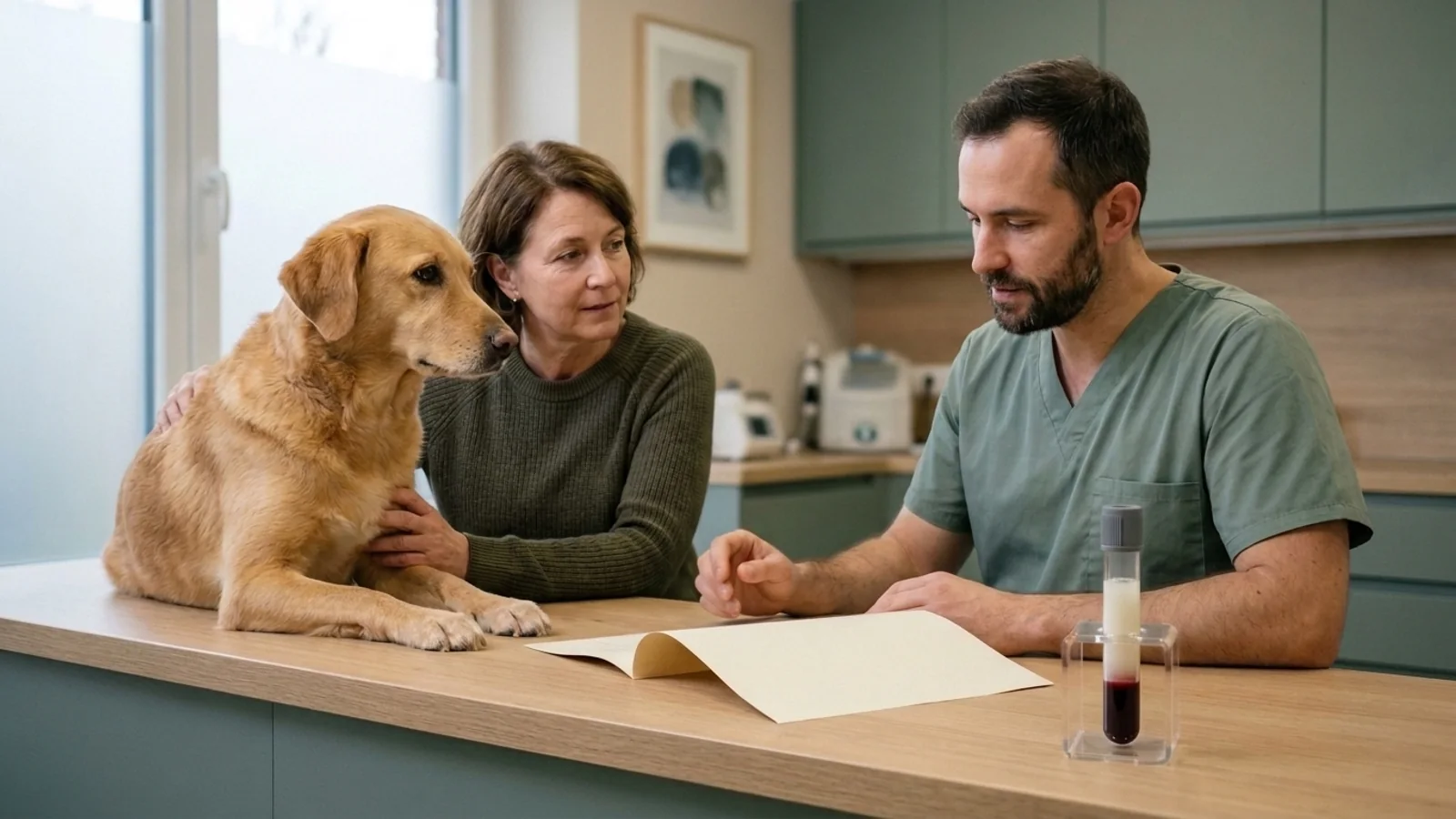
Ask your vet which specific results are usable for the decision at hand and which were reported with a warning or withheld. Share the draw time, when your dog last ate, and any medications or supplements. Your vet can check the individual result with the laboratory and decide whether it needs confirmation. If your dog is sick, contact the clinic promptly so an elective redraw or a fasting plan never delays care.
Which results can your vet use now?
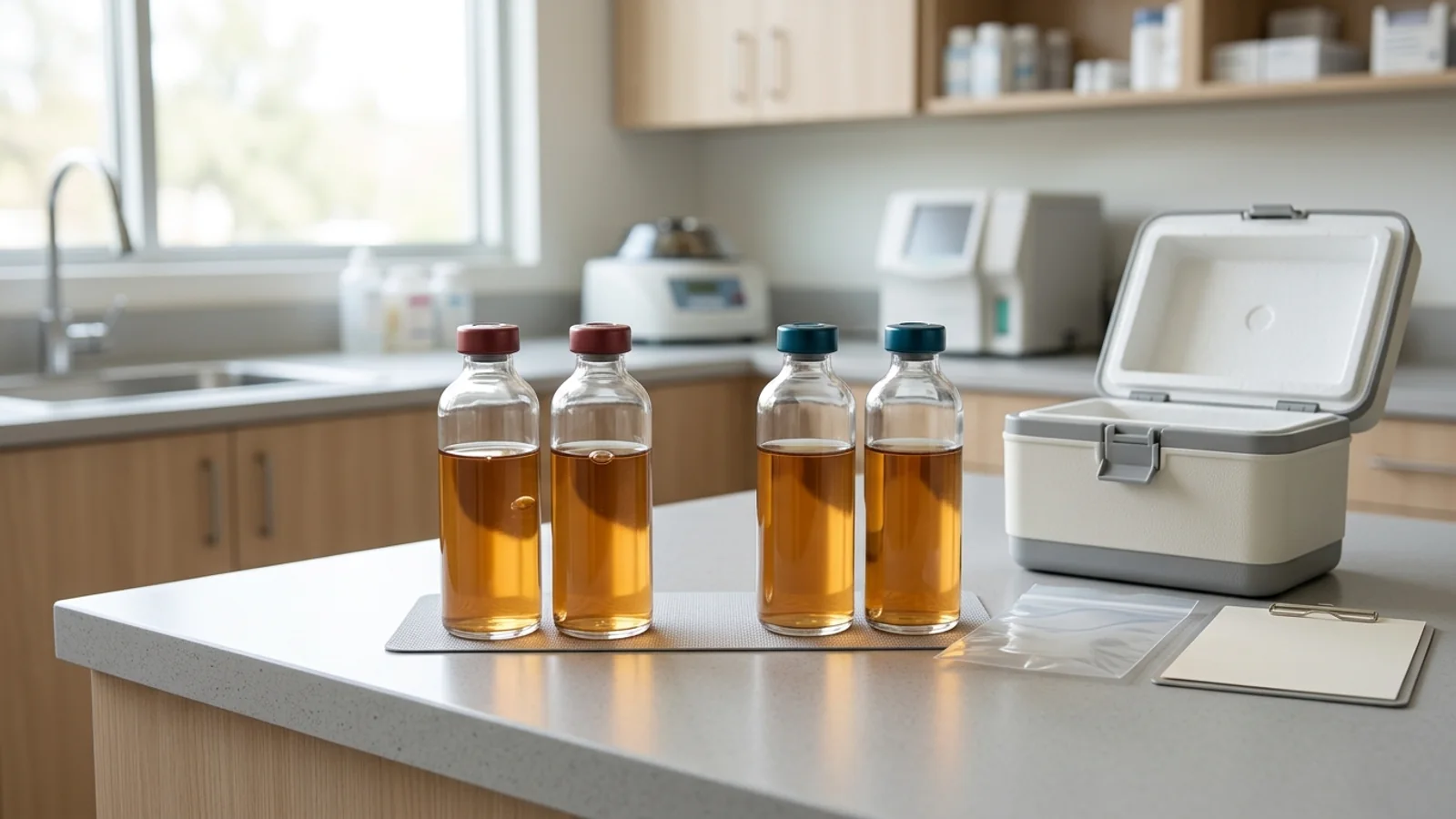
Serum and plasma are the liquid portions the laboratory can separate from the cells to run chemistry tests. Lipemic serum or plasma can range from hazy to milky. Triglycerides are carried in particles called lipoproteins. The larger particles that circulate after a meal, called chylomicrons, commonly account for the haze. Cornell eClinPath’s guide to sample interference.
A lipemia flag describes a sample condition and warns of possible measurement interference. The cause and the effect on a specific result take more information. A report may also carry a hemolysis flag if red cells have ruptured. Copy both flags if you see them so the clinic can account for each one.
Lipids can scatter the light used by some chemistry tests and make values such as bilirubin read high, depending on the assay. Lipemia can also affect the hemoglobin measurement on a complete blood count and raise derived values such as mean cell hemoglobin (MCH) and mean cell hemoglobin concentration (MCHC). In some electrolyte assays, fat takes up space that would otherwise be occupied by the sample’s water, where the electrolytes are dissolved. This effect, called volume displacement, can make sodium and chloride read low. Ask which measurement method the lab used before assuming the direction of bias. Cornell eClinPath’s interference guide.
Look for the lipemia index under sample quality or interference notes. On Cornell’s chemistry report, the index reflects turbidity and has only a weak relationship with the measured triglyceride concentration. Read the index or visual grade in the laboratory’s own terms. For dogs, Texas A&M’s Triglycerides test 1223 measures the concentration in serum or lithium-heparin plasma and specifies a 12-hour fast for those sample types. The clinic sets any preparation for your dog based on the test it orders. Cornell eClinPath’s index guide and Texas A&M’s triglyceride test listing.
| Report field | Possible effect of lipemia | What your vet can ask the lab |
|---|---|---|
| Lipemia index or grade | Describes sample cloudiness on the lab’s scale. | Which tests on this report are sensitive at this level of lipemia? |
| Bilirubin, bile acids, or hemoglobin on a CBC | Some methods may read high. The effect depends on the specific assay or reagent. | Which method was used, and how could the interference affect this value? |
| Sodium, chloride, or potassium | Some methods can read sodium or chloride low. Potassium read high in a study on one dry-slide analyzer. | Which method measured this electrolyte, and how reliable is the value on this specimen? |
| Measured triglycerides | A meal can raise the circulating concentration. Removing the fat layer can make the measurement read low. | Was the original sample used, and was the collection appropriate for the test ordered? |
Bile acids show why the reagent matters. Cornell’s bile acid reporting guide warns that lipemia can bias the result upward. Its interference-index table lists uncertainty for bile acids with newer reagents. If a bile acid value will drive a decision, ask the lab how its current test handles the flag on that specific draw. Cornell’s bile acid reporting guidance and Cornell eClinPath’s interference-index table.
What a recent meal can and cannot explain
Triglycerides can rise temporarily in the dog’s circulation after a meal. At the same time, lipoproteins can cloud the sample and alter how another test measures a substance. The veterinarian needs the feeding history to interpret the first effect and the laboratory’s method to assess the second. Cornell eClinPath’s discussion of recent food ingestion.
Yi and colleagues measured serum before and at two, four, six, and eight hours after a usual meal in 100 clinically healthy dogs weighing at least 15 kg. In 92 dogs, at least one post-meal triglyceride result differed from baseline by more than the study’s change threshold. Thirty-six dogs had a post-meal triglyceride result above the reference interval, including 33 with a baseline in range. For albumin and cholesterol, zero dogs crossed the study’s change threshold. Yi et al., Journal of Veterinary Internal Medicine, 2023.
Crossing a change threshold and crossing the lab’s upper reference limit are different events. For instance, post-meal blood urea nitrogen changed enough to exceed the study threshold in 66 dogs, yet every post-meal measurement was within the reference interval. The authors found that withholding food was generally unnecessary for routine chemistry in clinically healthy dogs and recommended consistent fasting conditions when monitoring triglycerides. Their cohort excluded dogs under 15 kg and observation ended eight hours after feeding. The study gives your vet context for the meal history, while the test and your dog’s condition determine preparation. Yi et al.’s results and discussion.
Tell the clinic when your dog last ate a meal or had a treat, chew, table scrap, or pill pocket. Give the draw time if you have it. If several people feed the dog, report a time range or say what you could verify. Include medications and supplements with the last dose time when known. Medication history can explain a separate source of interference. For example, Cornell asks for that history and notes that bromide can falsely raise some chloride measurements. Cornell’s clinical pathology submission guidance.
What the lab can tell you about a flagged result
Ask the clinic which lab or in-house analyzer ran the test. Cornell publishes guidance for its own Cobas 501, based on manufacturer experiments using human samples spiked with a lipid emulsion. Cornell advises interpreting those estimates alongside the dog’s signs and other results. A second lab can use a different instrument, reagent, or sample index scale. Consult the lab that produced your report for its own assessment. Cornell eClinPath’s analyzer-specific index guide.
When the current result will be compared with an earlier or later one, confirm whether both samples were serum or plasma. Cornell notes that potassium and phosphate can differ between those specimen types and recommends keeping the tube type consistent for serial chemistry during a patient’s hospital stay. If the facility changed, check the methods and the reference interval printed on each report with your vet. Cornell’s guidance on chemistry specimens.
| Status of the result you need | What the report tells you | What to confirm with the lab |
|---|---|---|
| Reported without an analyte-specific note | There is a number and possibly a panel-level lipemia flag. | For this method and degree of lipemia, is the value reliable enough for the vet’s question? |
| Reported with a caveat | There is a number plus a warning about interference or sample quality. | Is the expected bias high, low, or uncertain? Was the specimen processed or the test rerun? |
| Withheld or suppressed | The report gives no usable value for that line. | Was lipemia the reason? Can the lab test a remaining portion with a suitable method, or would it need a fresh draw? |
Azevedo and colleagues tested what happens when marked lipemia is simulated on one analyzer. They added a lipid emulsion to 15 pools of canine serum to reach 3,000 mg/dL of triglycerides, then used a Vitros 4600 dry-slide analyzer. The study measured potassium by direct potentiometry and still found a median positive bias of 6.5%, above the study’s 5% allowable error for potassium within or above the reference interval. Median enzymatic carbon dioxide bias was −21.8%, exceeding its 20% error limit. These are study results for this setup. Use the performing lab’s assessment for a result on your dog’s report. Azevedo et al., Journal of Veterinary Diagnostic Investigation, 2019.
After high-speed centrifugation, the median enzymatic carbon dioxide error fell within the study limit, while the median errors for potassium and chloride exceeded their limits. A chemical clearing reagent produced median errors above the study limits for total protein, chloride, and phosphorus in lipemic samples. It also introduced errors in samples without added lipid. The experiment used one emulsion concentration and one analyzer. Its bench centrifugation step differs from ultracentrifugation, and the study cannot predict the effect of clearing naturally lipemic samples on another platform. Azevedo et al.’s analytical comparisons.
Ask whether the lab can confirm the specific test from the original tube and how it would report that result. Michigan State’s diagnostic lab offers ultracentrifugation for an added charge when marked lipemia is likely to affect results. Zoetis’s Vetscan VS2 workflow distinguishes an elective new draw from time-sensitive options such as testing serum or plasma separated from whole blood or sending the specimen to a reference lab. The lab or clinic can tell you which options apply to the sample, their turnaround, and whether enough is left. A dedicated triglyceride measurement needs an unaltered portion because removing the fat layer would lower the concentration measured. Michigan State’s chemistry guidance, Zoetis’s VS2 instructions, and Cornell eClinPath’s sample interference guidance.
When a repeat could change the decision
Before planning a second draw, ask what the repeat would change. Consider a report with several available chemistry values and sodium accompanied by an interference warning. If sodium matters to the next decision, the vet can ask whether the existing sample can support a reliable result or whether a new specimen is needed. The rest of the panel can still contribute where the lab’s methods support it. The dog’s condition determines how quickly the team needs an answer.
The dog needs assessment now. If your dog is sick, contact your veterinarian or an emergency veterinary clinic promptly. The veterinary team can assess the dog and decide how to get any time-sensitive result while care proceeds. A fasting appointment can wait.
The current report answers the clinical question. If the lab supports the values your vet needs and they fit the exam and history, your vet may use them and keep a record of any unresolved interference for later comparison.
A specific result needs confirmation and the dog can safely wait. If a value was withheld or the expected error could change the interpretation, the veterinary team can see whether a different method can answer the question or arrange a targeted repeat. Ask which tests to repeat, when to return, and how to prepare.
If lipemia persists after the agreed preparation, give the vet both reports and describe what your dog actually ate and when. Persistent lipemia after a properly prepared draw can prompt evaluation of lipid metabolism. If a particular result stays abnormal in a clearer sample, the vet can investigate that finding on its own. A clearer repeat or a result that changes after processing gives the vet more information. The original results, exam, and history still matter. Cornell eClinPath on lipemia and recent food as a preanalytical variable.
A worksheet to send with the report
Send this worksheet with the original report, including the sample indices and all lab footnotes. For several affected tests, copy the analyte and method rows for each test. Start with the result your vet needs for the next decision. If a different clinic is taking over, include the original report in the records transfer so the new team receives the comments and the numbers together.
| Worksheet field | What to record | Why it matters |
|---|---|---|
| Laboratory and draw time | Name of performing lab or clinic analyzer. Record the collection date and clock time, or mark it as approximate. | Identifies the report and helps establish the interval since food. |
| Specimen type | Copy the printed type, such as serum or lithium-heparin plasma. Ask the clinic if the report leaves it out. | Specimen type can affect comparison with earlier or later results. |
| Exact lipemia flag or index | Copy the wording, number, and any printed units or grade. Include any other sample quality flags. | Preserves the lab’s description of specimen quality for review. |
| Analyte and report status | Write the test name and any printed value, units, and caveat. Note whether it was reported, caveated, or withheld. | Shows the lab which result the vet wants to use or confirm. |
| Lab method or comment | Copy any method or clearing note. If none is given, ask whether the flag affects this test or whether the lab can run it another way. | Clarifies what the current specimen can still answer. |
| Last meal or treat | Record meals, treats, chews, and food given with medicine. Give the time or label it unknown. | Gives the vet context for interpreting a post-meal sample. |
| Medications and supplements | List products and the time of each last dose when known, including anything given with food. | Helps the vet consider other effects on lab results and set safe preparation. |
| Veterinarian’s plan | Record which results can be used now. If repeating, write down the test, preparation instructions, and date or timing. | Makes clear what the next step is and which result it is meant to clarify. |
Keep the original and any amended or repeat report together. Ask which result the veterinarian used, which result still needs confirmation, and whether a later draw will use the same specimen type and method. That record gives the team a clear starting point if the same flag or abnormality appears again.
Sources
Cornell University College of Veterinary Medicine, eClinPath — Interferences
Cornell University College of Veterinary Medicine, eClinPath — Interference indices
Cornell University College of Veterinary Medicine, eClinPath — Non-disease variables
Yi KC, Heseltine JC, Jeffery ND, Cook AK, Nabity MB. Journal of Veterinary Internal Medicine (2023), PubMed Central — Effect of withholding food versus feeding on creatinine, symmetric dimethylarginine, cholesterol, triglycerides, and other biochemical analytes in 100 healthy dogs
Azevedo CN, Lidbury JA, Jeffery U. Journal of Veterinary Diagnostic Investigation (2019), PubMed Central — Effects of marked hypertriglyceridemia and lipid clearance techniques on canine biochemistry testing
Texas A&M Veterinary Medical Diagnostic Laboratory — Triglycerides (Test Code 1223)
Cornell University College of Veterinary Medicine, Animal Health Diagnostic Center — Samples & Submissions
Cornell University College of Veterinary Medicine, Animal Health Diagnostic Center — Samples for Chemistry
Cornell University College of Veterinary Medicine, Animal Health Diagnostic Center — Clinical Pathology Panels and Guidelines
Zoetis Diagnostics — Handling lipemia (Vetscan VS2)
Michigan State University Veterinary Diagnostic Laboratory — Chemistry