Can My Cat’s Tritrichomonas PCR Sample Be Used if It Touched Litter?
Learn why litter contact matters for feline Tritrichomonas PCR, what Texas A&M, NDSU, and Cornell publish, and what to tell your vet before a sample is sent.

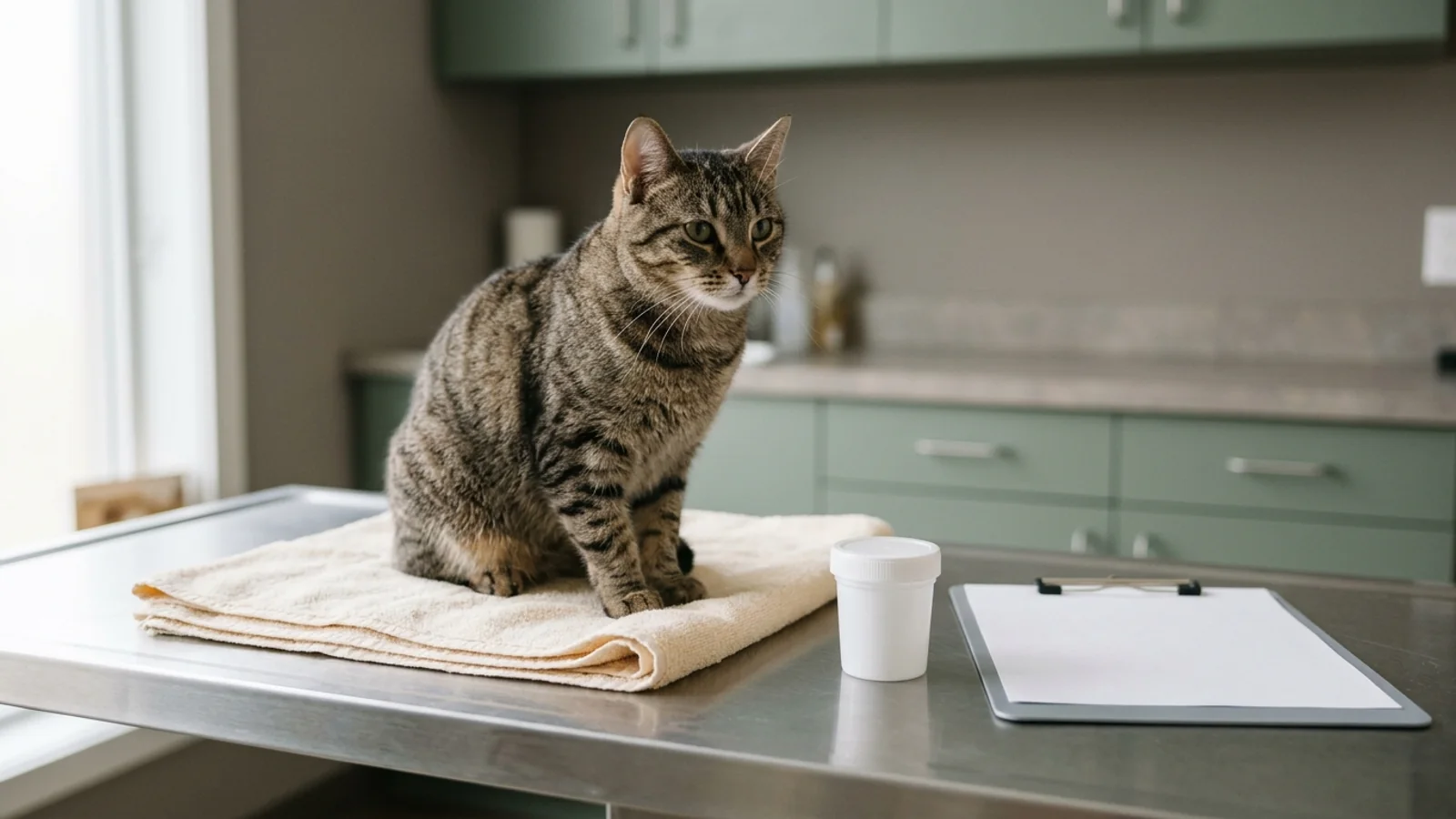
Tell your veterinarian right away if the stool touched cat litter or if you are unsure, when the stool passed and went into a container, and whether your cat was having diarrhea at that moment. Different diagnostic laboratories publish different acceptance wording for feline Tritrichomonas foetus / Tritrichomonas blagburni fecal PCR, so the clinic needs those details before submitting your sample. Texas A&M’s Gastrointestinal Laboratory (GI Lab) requires spontaneously passed stool to be free of cat litter because components of some litters may inhibit PCR reactions. North Dakota State University’s Veterinary Diagnostic Laboratory (NDSU VDL) asks to remove as much cat litter as possible without listing an allowable amount of residual litter, while Cornell’s Animal Health Diagnostic Center (AHDC) lists fresh feces in a sterile container or In-Pouch media for test code RTRIPCR without a published litter criterion. Have your clinic confirm the exact ordered test and receiving lab rules before shipping, and if a result is already back, remember that a single negative PCR cannot rule out infection on its own.
Tell the Clinic if the Stool Touched Litter
When your veterinarian orders a feline Tritrichomonas fecal PCR, the most helpful thing you can do before dropping off a cup is to separate what you observed from what you are guessing. Clinics deal with three very different scenarios when an owner brings in a home stool specimen: confirmed litter-free stool caught directly on a clean non-absorbent surface, stool that visibly contacted litter granules or dust, and stool recovered from a litter box where contact time, burial, or even which cat passed it is uncertain.
Why does that distinction matter for PCR? Polymerase chain reaction tests amplify tiny amounts of protozoan DNA using enzymatic reactions. According to Texas A&M GI Lab’s feline Tritrichomonas assay page, components of some cat litters may inhibit PCR reactions, which is why that laboratory requires spontaneously passed feces submitted for its assay to be free of cat litter. In the same vein, the European Advisory Board on Cat Diseases (ABCD) trichomonosis guideline identifies PCR inhibition—alongside target DNA concentrations below the assay detection limit and intermittent parasite shedding—as a biological and technical reason a fecal PCR can return a negative result even when a cat is infected.
At the same time, it is important not to overstate what litter contact proves. Known litter contact does not automatically mean PCR inhibition occurred in your cat’s sample, and published diagnostic pages do not rank litter brands, establish a dose-response curve for residual dust, or guarantee a safe threshold of carryover. Just as importantly, picking visible granules off the outside of a stool does not guarantee you have removed dissolved or microscopic inhibitors. Do not rinse, soak, or try to clean a fecal sample at home: none of the laboratory pages reviewed here describes a cleanup step that makes a litter-exposed specimen acceptable. Instead, keep the specimen sealed and refrigerated if instructed, tell the veterinary team exactly what happened, and let them decide whether to submit it, call the laboratory, or plan another collection.
Be careful as well not to confuse feline stool PCR with other tests that share similar names. In cattle, Tritrichomonas foetus is a sexually transmitted reproductive-tract parasite, and cattle sampling protocols do not apply to cats; the ABCD guideline also notes that feline strains are distinct from bovine strains. Fecal pouch culture (such as InPouch TF) depends on live organisms growing in culture medium, whereas PCR detects specific target DNA sequences. Likewise, routine parasite screening—covered in our guide comparing fecal flotation and fecal antigen testing—looks for worm eggs, coccidia, or Giardia rather than Tritrichomonas, so a clean routine fecal check does not replace a targeted Tritrichomonas PCR when chronic large-bowel diarrhea is on the table.
Check the Requirements for the Lab Running the PCR
Clinics do not all send feline PCR samples to the same reference laboratory, and even within a single university diagnostic service, a standalone Tritrichomonas assay page and a general fecal-testing page can list different fecal mass requirements. Treating diagnostic laboratories as interchangeable risks sending too little stool, the wrong container or medium, or the wrong shipping temperature for the test that was actually ordered.
The comparison below summarizes the published specimen instructions verified as of November 20, 2026 across three university veterinary diagnostic laboratories: Texas A&M’s GI Lab (showing both its assay-specific page and its general fecal sample page), NDSU’s Veterinary Diagnostic Laboratory, and Cornell’s Animal Health Diagnostic Center. Where a public catalog row does not state a policy—such as a litter rule or gram weight on Cornell’s RTRIPCR line—it is marked as unspecified rather than assumed.
| Laboratory | Exact Test / Plan | Published Litter Wording | Specimen & Mass | Container / Media | Storage & Transport |
|---|---|---|---|---|---|
| Texas A&M GI Lab (Assay Page) | Fecal PCR Test for Tritrichomonas foetus/blagburni | Spontaneously passed stool must be free of cat litter (components of some litters may inhibit PCR) | 1 g fresh feces; recommends sampling when the cat has diarrhea | Container not specified on the assay page; collect voided stool promptly after defecation | Refrigerate up to 1 week after collection; ship cooled overnight with a gel ice pack |
| Texas A&M GI Lab (General Fecal Page) | General Fecal PCR, IFA & Bacterial Toxin Assays | Unspecified on this general fecal section (refer to assay-specific instructions) | 3–5 g fresh feces | Sealed storage container (leak-proof tube, cup, or plastic bag) | Ship as soon as possible, cooled overnight with frozen gel ice packs |
| NDSU Veterinary Diagnostic Lab | Tritrichomonas foetus/blagburni (Feline) (PCR) | Remove as much cat litter as possible (no numeric residual tolerance published) | Feces (1 g minimum), intestinal contents, or intestine | Clean, sealed container | Refrigerated storage (2–8°C) |
| Cornell AHDC | Feline Diarrhea Diagnostic Plan (RTRIPCR) | Unspecified on the RTRIPCR plan row | Fresh feces (mass unspecified on plan row) | Sterile container or In-Pouch media | Chilled shipment for antemortem specimens, with media-specific exceptions (such as room-temperature In-Pouch) |
Two practical lessons jump out from this table. First, notice the difference between Texas A&M GI Lab’s two pages: its dedicated feline Tritrichomonas PCR page specifies 1 g of fresh feces, whereas its broader general sample requirements page for fecal PCR, IFA, and bacterial toxin assays lists 3–5 g. If your veterinarian ordered several fecal tests from that laboratory rather than the standalone Tritrichomonas PCR, the larger general amount may be the one that applies, so a small sample could fall short. Only the clinic can confirm the exact order code on the submission form and verify which volume requirement governs that submission.
Second, do not borrow instructions from adjacent rows in a diagnostic catalog or from culture workflows. On Cornell’s Feline Diagnostic Plans and Panels page, the RTRIPCR row lists fresh feces in a sterile container or In-Pouch media, and the plan notes specify chilled shipment for antemortem specimens except for named media such as room-temperature In-Pouch. Because that row does not publish a litter wording or a gram threshold, your clinic should check directly with Cornell’s laboratory if a specimen has litter exposure or borderline quantity, rather than assuming another test’s rule applies.
Record When the Stool Passed and How the Cat Was Doing
Even when litter contact is minimal, timing and clinical context strongly affect whether a home specimen is worth sending. Tritrichomonas shedding can fluctuate, and Texas A&M’s GI Lab explicitly recommends collecting stool while the cat is experiencing diarrhea to improve detection, noting that spontaneously passed samples should be obtained promptly and kept free of litter. The ABCD guideline likewise describes fresh, diarrheic, mucoid samples as preferable to solid feces, so old, dried, or formed stool pulled from a box hours after passage is a weaker starting point than a fresh diarrheic sample that was refrigerated promptly.
Multi-cat households add a second common trap: uncertainty about which cat actually produced the stool. Unless you watched a specific cat pass the sample or isolated that cat temporarily under veterinary guidance, tell your clinic that cat identity is unconfirmed. Testing a healthy housemate’s stool—or pooling guesswork across a shared box—can derail a diagnostic workup and delay care for the symptomatic cat.
Before you bring the container to the hospital or ask the clinic to ship it, use the handoff checklist below to organize the exact facts your veterinarian needs. Notice the division of labor: you supply the factual timeline and handling history, while the clinic owns the lab choice, order confirmation, submission decision, and any plan for a replacement specimen.
| Handoff Field | What to Record | Who Confirms | Why It Changes the Next Step |
|---|---|---|---|
| Cat Identity | Single-cat home, directly observed passage, or shared-box household (uncertain) | Owner | Prevents submitting stool from the wrong housemate in multi-cat homes |
| Passage & Collection Times | Time stool passed (or window since box was last clean), time sealed, time refrigerated | Owner | Establishes freshness against lab storage windows (for example, prompt collection and 2–8°C holding) |
| Stool Consistency at Passage | Liquid diarrhea, soft/mucoid stool, or formed/dried stool | Owner | Texas A&M recommends sampling during diarrhea, and the ABCD guideline describes fresh diarrheic samples as preferable to solid feces |
| Litter Contact Status | None (caught clean), known contact, or unknown; note litter material if known | Owner | Flags potential PCR inhibition under Texas A&M’s litter-free rule or NDSU’s minimize-litter rule |
| Handling & Storage Since Collection | Container type, whether kept chilled or at room temperature, and whether any litter was picked off | Owner | Shows the clinic whether storage and handling match the receiving lab’s container and temperature instructions |
| Recent Medications (If Asked) | Any recent antibiotics, antiprotozoals, or GI drugs—reported as history only | Owner (Clinic interprets) | Texas A&M and the ABCD guideline publish antimicrobial timing advice for fecal testing, so the vet needs this history; never stop or start medications without vet advice |
| Receiving Lab & Exact Order | Named laboratory, standalone Tritrichomonas PCR vs. multi-agent diarrhea panel, test code | Veterinary Clinic | Determines required mass (such as 1 g vs. 3–5 g), media (sterile cup vs. In-Pouch), and litter policy |
| Acceptance or Replacement Plan | Submit available sample, call receiving lab to verify, or collect a fresh home/in-clinic specimen | Veterinary Clinic | Keeps collection method, shipping logistics, and specimen suitability judgment with the clinical team |
flowchart TD
  A["Owner collects stool and notes litter contact, cat ID, timing, and diarrhea"] --> B["Call clinic before drop-off or shipment"]
  B --> C["Clinic matches exact ordered assay and receiving lab rules"]
  C --> D{"Clean, fresh, and meets lab specs?"}
  D -- "Yes" --> E["Chill and ship per lab instructions"]
  D -- "Uncertain or litter-exposed" --> F["Clinic checks with receiving lab or orders replacement"]
F --> G["Fresh litter-free home sample or in-clinic collection planned by vet"]Notice how this workflow protects both your wallet and your cat’s timeline. Calling ahead before driving a questionable sample to the clinic—or worse, paying for overnight cold-chain shipping on a specimen the lab cannot use—gives the veterinary team a chance to verify the ordered test, consult the lab if needed, or schedule an in-clinic visit instead.
What to Ask if the Result Was Already Negative
If your clinic already submitted a litter-exposed, formed, or delayed stool specimen and the PCR report came back negative, the first question to ask is whether the laboratory issued a reportable negative or flagged a specimen or assay-control problem. The ABCD guideline notes that most PCR laboratories screen for fecal inhibitors with internal control reactions, and Texas A&M states that all of its PCR reactions run with positive and negative controls. How a report flags specimen quality differs between laboratories, so ask the clinic to review the full report and its comments—not just a one-word summary—to see whether the test ran cleanly on the material submitted.
Even when an assay runs without a flagged control failure, the ABCD trichomonosis guideline explains that a single negative PCR cannot exclude Tritrichomonas infection if target DNA levels fall below the assay’s detection threshold, if the cat is shedding intermittently, or if fecal inhibitors affect the reaction. When chronic large-bowel signs—such as foul-smelling diarrhea, mucus, fresh blood, or straining—keep returning despite a negative test, your veterinarian may re-evaluate specimen quality rather than closing the book on trichomonosis.
Why might a veterinarian suggest a different collection method the second time? A 2020 retrospective study by Hedgespeth and colleagues in the Journal of Veterinary Internal Medicine examined 1,717 cats whose feces were submitted to a single diagnostic laboratory between 2012 and 2017, with collection method recorded for 1,016 cats. Compared with colonic flush specimens, clinician-collected fecal loop specimens had higher odds of PCR positivity (odds ratio 2.04, 95% confidence interval 1.31–3.17), whereas spontaneously passed specimens did not show a statistically significant difference compared with colonic flush (odds ratio 1.09, 95% confidence interval 0.68–1.72).
Those findings come with important caveats that both owners and clinics should keep in view. Hedgespeth et al. analyzed historical submission forms with incomplete histories, each cat did not undergo all three collection methods side by side, and the retrospective design cannot prove causation or measure population prevalence. Furthermore, the study did not evaluate litter contamination. Still, it helps explain why a veterinarian who doubts the quality of a voided home sample—especially one exposed to litter or collected when stool was formed—may discuss obtaining a fresh in-clinic specimen or repeating evaluation rather than relying solely on the first negative result.
What if the PCR result came back positive? A positive fecal PCR establishes that Tritrichomonas target DNA was detected in that specimen. However, the ABCD guideline notes that PCR detects DNA of nonviable as well as viable organisms, and that cats can be infected without showing clinical signs. A positive result therefore does not by itself confirm live organisms or prove that Tritrichomonas is causing your cat’s diarrhea; your veterinarian weighs the detection alongside your cat’s ongoing clinical signs, age, household exposure, and recent medications before recommending any treatment plan.
Practical Ways to Capture a Cleaner Sample Next Time
If your veterinarian decides that a fresh, uncontaminated home specimen is the best next step—rather than an in-clinic sample—confirm the container, storage temperature, and drop-off window before trying again. A little preparation prevents repeating the same litter-box dilemma:
Confirm whether a home sample is actually wanted: Ask your clinic first whether they prefer a spontaneously passed sample or plan to collect one during an exam, and verify whether you need a sterile screw-top cup or clinic-supplied In-Pouch media.
Use a clean, litter-free barrier only if your vet approves: For cats that will not defecate without a box, ask your clinic whether it recommends a clean, empty pan or a specific non-absorbent collection product, and use only what it approves. The laboratory pages reviewed here do not endorse any particular collection aid.
Isolate multi-cat patients briefly if advised: If more than one cat uses the same box, ask your veterinarian how to safely separate the symptomatic cat with clean bedding, water, and a clean collection pan so sample identity is unmistakable.
Target active diarrhea and chill promptly: Follow your receiving lab’s instructions—such as Texas A&M’s recommendation to sample during diarrhea, collect voided stool promptly, and refrigerate it—and deliver the specimen to the clinic as soon as practical.
Keep monitoring the whole cat: Do not wait around trying to catch a perfect stool sample if your cat stops eating, seems painful, vomits repeatedly, or appears dehydrated. Contact your veterinarian right away for direct assessment.
For broader context on evaluating loose stool in cats—including when chronic diarrhea warrants a stepwise workup and why withholding food is unsafe—see Why Is My Cat Having Diarrhea?.
Sources
Texas A&M University Gastrointestinal Laboratory — Fecal PCR Test for Tritrichomonas foetus/blagburni. Accessed November 20, 2026. Assay-specific specimen mass (1 g fresh feces), diarrhea timing, litter-free requirement for spontaneously passed stool, refrigeration/overnight shipping, and DNA detection notes.
Texas A&M University Gastrointestinal Laboratory — Sample Requirements. Accessed November 20, 2026. General fecal PCR, IFA, and bacterial toxin specimen guidance (3–5 g fresh feces in a sealed container, cooled overnight shipping).
North Dakota State University Veterinary Diagnostic Laboratory — Tritrichomonas foetus/blagburni (Feline) (PCR). Accessed November 20, 2026. Minimum 1 g feces, clean sealed container, 2–8°C storage, and instruction to remove as much cat litter as possible.
Cornell University Animal Health Diagnostic Center — Feline Diagnostic Plans and Panels. Accessed November 20, 2026. Feline Diarrhea Diagnostic Plan test code RTRIPCR specimen and transport instructions (fresh feces in sterile container or In-Pouch media; chilled shipment with media-specific exceptions).
Hedgespeth BA, Stauffer SH, Robertson JB, Gookin JL — Association of fecal sample collection technique and treatment history with Tritrichomonas foetus polymerase chain reaction test results in 1717 cats, Journal of Veterinary Internal Medicine (2020; PMCID: PMC7096610). Retrospective single-laboratory analysis of 1,717 feline submissions comparing collection methods and PCR positivity odds ratios.
European Advisory Board on Cat Diseases (ABCD) — Guideline for Trichomonosis. Accessed November 20, 2026. Diagnostic limits of PCR including intermittent shedding, low target levels, PCR inhibition, detection of nonviable-organism DNA, and confirming receiving lab preferences.