What to Record When Sending Veterinary Blood Culture Bottles
Match each veterinary blood culture bottle to its patient, draw, and antimicrobial history, and document transport exceptions for the receiving lab.

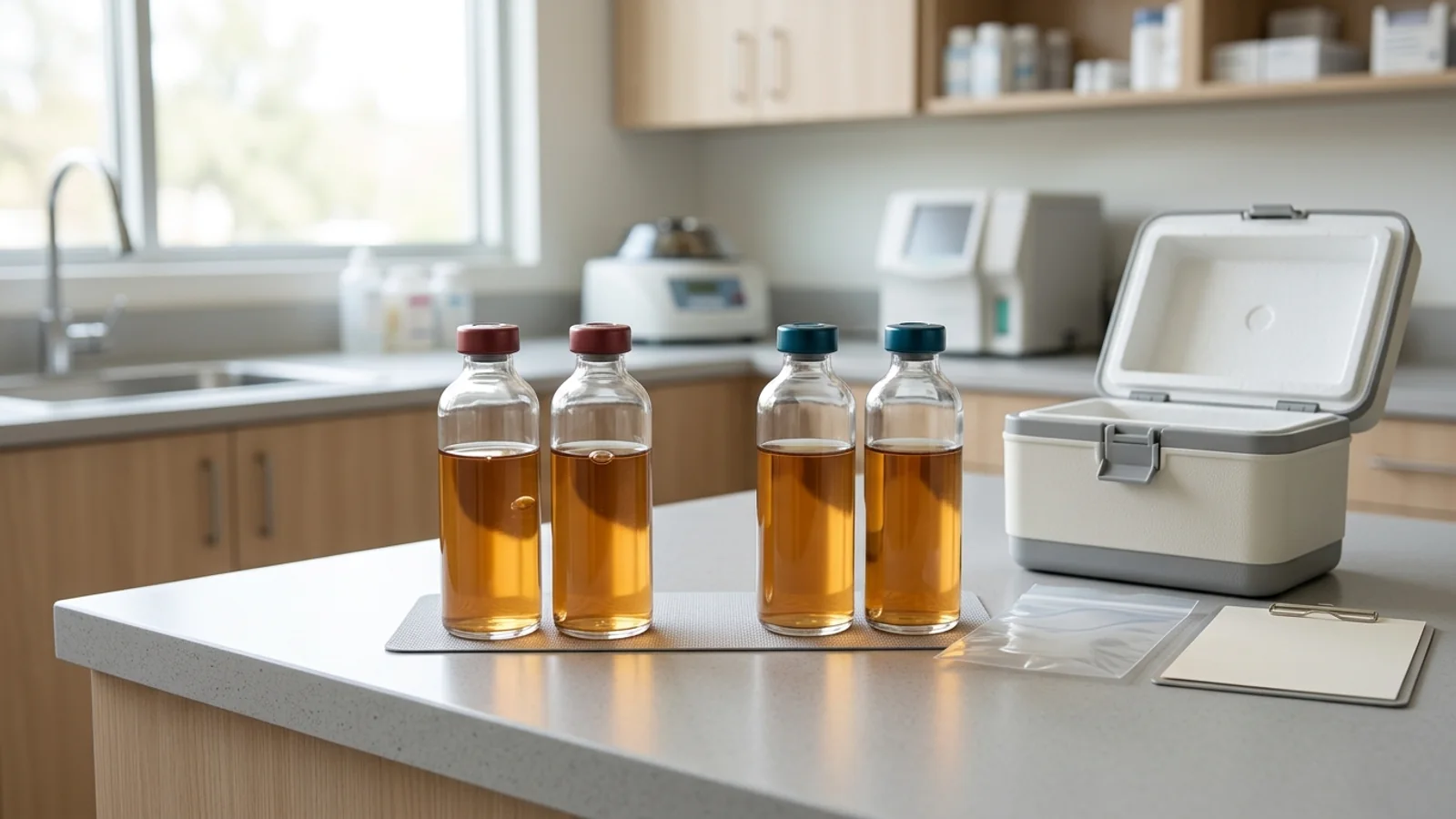
For each veterinary blood culture bottle, record the patient identifiers required by the receiving lab, the actual collection date and time, and the bottle type. Match the identifiers to the requisition and show which bottles came from the same draw. Confirm the container, the requested antibiotic history and the arrival plan in the instructions for the ordered test.
If pickup slips, storage conditions are uncertain, or a label or container differs from the order, tell the lab which bottles are affected and give the actual timeline. Ask for instructions before dispatch if the shipment is still at the clinic. If the bottles are already in transit, call as soon as the discrepancy is found. Record the lab’s advice so the attending veterinarian has it when the report comes back.
Confirm the receiving lab and bottle type
Confirm the test name or code with the receiving bacteriology section, especially if the clinic may switch destinations. Check which containers the lab accepts and whether antimicrobial susceptibility testing is included. That information belongs on the order and gives the next shift a starting point if the shipment needs to be rerouted.
Cornell University’s Animal Health Diagnostic Center specifies distinct media for its aerobic and anaerobic bottles. Its general intake guidance requires submission through a licensed veterinarian. Cornell blood culture instructions · Cornell submission guidance
Nebraska Veterinary Diagnostic Center asks clinics to obtain its bottles from its bacteriology lab before collection. The University of Missouri Veterinary Medical Diagnostic Laboratory lists citrate and heparin tubes and lab-supplied bottle options for its Blood Culture test. Missouri’s listing covers culture and organism identification and excludes antimicrobial susceptibility testing. Nebraska collection and shipping instructions · Missouri Blood Culture test listing
Write the lab, the ordered test and the actual medium or container in the handoff record. Use the printed container name to confirm the match. A cap color alone gives the person checking the order too little information, especially if the clinic stocks bottles for more than one lab.
| Receiving lab | Listed containers | Bottle identifiers | Antibiotic history | Holding and arrival |
|---|---|---|---|---|
| Cornell University AHDC | Separate bottles with different media for aerobic and anaerobic culture. | Animal name or ID and collection date and time. General intake guidance also calls for owner and animal names on each sample and matching identifiers on the form. | Report current antibiotic treatment on the submission form. | Avoid refrigerating inoculated bottles and protect them from temperature extremes. Confirm testing arrangements for Saturday arrival. |
| Nebraska VDC | Aerobic and anaerobic bottles supplied by Nebraska’s bacteriology lab. | Patient identifiers, such as name and ID number, and date and time of collection. | Confirm any history fields on the current order form. | Hold at room temperature without refrigeration or incubation and deliver within 24 hours of collection under Nebraska’s instructions. |
| Missouri VMDL | Citrate or heparin tubes. Missouri also lists lab-supplied bottle options based on whether the animal has received antibiotics. | Confirm bottle-label fields with the lab when ordering. | If the animal received antibiotics, give the drug name and last-dose date on the submission form. | Confirm transport handling and arrival with the lab. |
Match every bottle to its requisition
A parcel may contain bottles from more than one draw or patient. At lab intake the bottles may be separated from the original packing order, so each one needs to be identifiable on its own and easy to match to the correct order entry.
Check the identifiers on the bottle and form
Cornell and Nebraska both request a patient identifier and the actual collection date and time on each bottle. Cornell’s general intake guidance also requests owner and animal names, a clearly stated submission date, and the same animal identifiers on the samples and requisition. Keep the date the specimen was submitted separate from the date it was drawn. Cornell submission guidance · Nebraska collection and shipping instructions
If the requisition says “Dog A, VM-4821” and a bottle is marked only “A,” flag the discrepancy before dispatch. Check the original collection record for what was documented. If identity is uncertain or the bottle has left the clinic, ask the receiving lab what it needs to reconcile the discrepancy. Keep the affected bottle and the open question in the handoff record so the next shift can follow up.
Give each draw its own identifier
A patient identifier links the bottle to a patient. A draw identifier links it to one collection event. If four bottles came from two draws, “Set A” and “Set B” can show which bottles came from each event. Record the actual clock time and use one row per bottle. Add the set ID to the label or requisition where the lab’s workflow allows it. The set ID is a suggested clinic record field.
In the UC Davis canine study, retrospective records included collection site, timing and growth by bottle. A register with those links lets the clinic see whether the bottles named in a report came from the same event. If the report does not identify the bottle or set, ask the lab what it can verify and record any uncertainty. Epstein, Byrne, and Sykes (2025)
Record the antibiotic history the lab asks for
Cornell asks clinics to note current antibiotic treatment on the submission form. If the animal received antibiotics, Missouri asks for the drug name and the date of the last dose. Put the confirmed history in a field that the receiving lab can locate quickly. Cornell blood culture instructions · Missouri Blood Culture test listing
For a transferred patient, record the antibiotic and last-dose date you can confirm. If the referring clinic verifies the date but cannot verify the time, record the date and mark the time unknown when the lab requests it. If exposure itself is uncertain, record that and let the lab know when clarification is available.
What to tell the lab when transport changes
A missed pickup, an unmonitored storage period, a mismatched identifier and an unexpected container each give the intake team a different problem to resolve. Start the call with the patient or order identifier, the affected bottles and the specific change. Have the collection record and expected route at hand.
Cornell tells clinics to avoid refrigerating its inoculated bottles and to protect them from temperature extremes. Nebraska specifies room-temperature holding and delivery within 24 hours of collection for its workflow. Tell the receiving lab what happened when the plan changes. A published delivery target alone does not resolve whether a delayed bottle can be tested. Cornell blood culture instructions · Nebraska collection and shipping instructions
Ask the receiving lab how to proceed and which details it wants with the order. Record the time of the call, who provided the instructions, and any follow-up that is still pending. If advice applies only to particular bottles, attach that note to their rows in the register.
Track pickup, receipt and testing separately
Put the collection time on each bottle row and keep dispatch and tracking information with the shared order. Mark a revised delivery time as an estimate until the courier confirms delivery. Keep the lab’s confirmed receipt or accession time in a separate field. That lets the next shift tell whether the shipment needs a courier update or a call to the lab.
Cornell’s general guidance says it receives Saturday submissions from 9 a.m. to noon and prepares them for the laboratories. Testing may begin in the following workweek. Ask the receiving lab about holiday hours and the expected start of testing when dispatch timing changes. Cornell submission guidance
Sandbrink and colleagues reviewed 750 blood cultures from 687 dogs at one German teaching hospital. Among 102 cultures with clinically relevant growth, the median time from collection to lab receipt was one day. Weekend collections took a median of one day longer to reach the lab than weekday collections, while total processing duration did not differ significantly. The study measured one hospital’s internal workflow. Get courier and testing estimates from your receiving lab, and record receipt and processing as distinct milestones. Sandbrink et al. (2026)
| Exception | Verify and record | Ask the lab |
|---|---|---|
| Delayed or missed pickup | Actual draw times, last verified storage location and conditions, and the revised arrival estimate. | Can the lab receive the affected bottles at the revised time, and what should the clinic do until then? |
| Temperature departure or unmonitored holding | Affected bottle IDs, known conditions and duration, and any measured temperature. Mark missing measurements as unknown. | How does the lab want this history documented, and what does it recommend for those bottles? |
| Weekend or holiday arrival | Courier estimate and whether the lab has confirmed its receiving hours for that day. | When can the lab receive the package and when does it expect testing to begin? |
| Label and requisition mismatch | Visible label text, order entry and confirmed patient details from the collection record. | What documentation does intake need to reconcile the identifiers? |
| Unexpected or unverified container | The container or medium printed on the label and the exact test requested. | Is the container compatible with this test, and how should the clinic proceed? |
Why the lab needs to know which bottles came from each draw
Intake determines whether the lab can process the specimen. The culture report describes any observed growth. The attending veterinarian and lab then consider whether growth could reflect contamination and whether it is relevant to the patient’s illness. The shipping log documents what happened in transit. The bottle register supplies the collection context for interpreting growth.
In the UC Davis study of 323 submissions from 279 dogs, 55 submissions showed growth. Investigators classified 35 as clinically relevant and 20 as contamination. Their review considered whether the same organism grew from separate collections. When growth was limited to a single bottle, they checked the medical record for clinical or other laboratory findings that supported relevant growth. These classifications reflect one teaching hospital’s study. Epstein, Byrne, and Sykes (2025)
A retrospective study from seven academic centers found non-contaminant positives in 152 of 701 dogs. The investigators found no statistically significant association between culture positivity and either the number of specimens or the interval between collections. They counted an aerobic and anaerobic pair from the same draw as one specimen. Their findings leave the optimal sampling schedule unresolved. Ogrodny et al. (2023)
Two bottles with growth from Set A both belong to a single draw. If the same organism is reported from Set A and Set B, the veterinarian can review findings from two distinct collection events. If only one bottle shows growth, the clinic can bring the matching draw record and other relevant clinical findings to the discussion with the lab. Both studies used selected canine hospital populations. They give context for keeping the records, and neither tested whether a handoff checklist reduces contamination.
When the report comes back, match its accession number and any bottle or set identifiers to the clinic’s register. Keep the intake note with the result. Check whether susceptibility testing is included or requires an additional order. Missouri lists culture and identification in its Blood Culture test and excludes susceptibility testing. Missouri Blood Culture test listing · How to read a culture and sensitivity report
Clinic handoff checklist
Use a shared dispatch log for the whole order and a bottle register for details that can differ within the shipment. These tables combine the named labs’ requested fields with suggested clinic fields for traceability. Copy the fields that fit your lab’s order and replace the fictional entries with actual details. Keep both records available to the team member who will answer the lab’s call.
Shared dispatch and exception log
| Dispatch field | What to record | Fictional delayed-pickup example |
|---|---|---|
| Submitting clinic and contact | Clinic, submitting veterinarian, lab account if required, and direct callback number. | Example Veterinary Clinic, Dr. A. Example. Callback in order record. |
| Receiving lab and test | Receiving lab, test name or code and requisition number. Confirm whether susceptibility requires a separate order. | Example State Veterinary Diagnostic Lab. Aerobic and anaerobic blood culture, requisition EX-001. Susceptibility coverage unconfirmed. |
| Patient and owner identifiers | Identifiers required by the lab, as written on the requisition. | Dog A, Owner A, case VM-4821. |
| Antibiotic history | Exposure details requested by the lab and any unconfirmed fields marked unknown. | Prior antibiotic exposure unknown. Referring clinic contacted for medication record. |
| Transport or storage change | What changed, which bottles are affected, and known conditions and timing. | All four bottles missed the 16:30 pickup on Friday, Nov 20, 2026. Last verified location was the clinic prep room. Temperature was unlogged. |
| Revised arrival and lab advice | Revised arrival estimate, lab contact, date and time of the call, and instructions for the affected bottles. | Saturday delivery is tentative. Awaiting lab instructions before dispatch. |
| Courier and lab receipt | Actual courier handoff and delivery when known, followed by the lab’s confirmed intake and accession number. | Courier handoff pending. Lab receipt and accession pending. |
| Testing status | Any expected testing start or notification time the lab gives. Mark estimates as tentative. | Awaiting a testing estimate from the lab. |
Bottle register for the same shipment
| Bottle ID | Draw | Medium | Collected | Label checked against order | Exception |
|---|---|---|---|---|---|
| 1 of 4 | Set A | Aerobic | Nov 20, 2026 at 14:15 | Dog A, Owner A, VM-4821 | Missed pickup. See dispatch log. |
| 2 of 4 | Set A | Anaerobic | Nov 20, 2026 at 14:15 | Dog A, Owner A, VM-4821 | Missed pickup. See dispatch log. |
| 3 of 4 | Set B | Aerobic | Nov 20, 2026 at 15:00 | Dog A, Owner A, VM-4821 | Missed pickup. See dispatch log. |
| 4 of 4 | Set B | Anaerobic | Nov 20, 2026 at 15:00 | Dog A, Owner A, VM-4821 | Missed pickup. See dispatch log. |
Sources
Cornell University Animal Health Diagnostic Center. Bottle media, identifiers, antibiotic history and handling. Blood Culture Technique
Cornell University Animal Health Diagnostic Center. General requisition, packaging and receiving guidance, including Saturday intake. Submission Guidance
Nebraska Veterinary Diagnostic Center, University of Nebraska–Lincoln. Its supplied bottles, label fields, handling and delivery target. Blood Culture Collection and Shipping
University of Missouri Veterinary Medical Diagnostic Laboratory. The test’s listed containers, antibiotic history fields and scope. Blood Culture
Epstein SE, Byrne BA, Sykes JE. Journal of Veterinary Internal Medicine, 2025. Bottle-level growth and clinical review in 323 canine submissions. Indications for Blood Cultures in Dogs and Associations With Positive Results in 323 Submissions
Ogrodny AJ et al. Frontiers in Veterinary Science, 2023. Specimen counts, collection intervals and positivity in 701 dogs. Multi-institutional retrospective study investigating blood culture protocols and test positivity in 701 dogs
Sandbrink T et al. Journal of Veterinary Internal Medicine, 2026. Time to receipt and processing in one German teaching hospital. Veterinary blood culture diagnostic testing: methodology and results from a German single-center study on dogs (2014-2022)