Your Dog's MDR1 Result: Put the Exact Genotype in the Medication Record
How to read a canine MDR1 (ABCB1) result across laboratories, get the exact genotype into your dog's veterinary record, and ask for a vet-led medication review.

An MDR1 (also called ABCB1) genetic test result only protects your dog at the moment a prescription or anesthetic order is written—and only if the laboratory's exact genotype wording, the testing laboratory's name, the specimen type, and the report date are entered verbatim into your dog's veterinary medical and medication record. Writing a vague note such as "MDR1 positive" or "carrier" leaves a future clinician guessing whether your dog has zero, one, or two copies of the mutated gene, because every dog naturally possesses the MDR1 gene (Washington State University WADDL).
The 30-Second Answer: What to Do With an MDR1 Result Today
When an MDR1 laboratory report arrives in your inbox or patient portal, your immediate goal is not to memorize a pharmacology textbook or alter your dog's daily routine on your own. Your job is a clean, durable clinical handoff so that every veterinarian who treats your dog—today, during a routine dental cleaning two years from now, or at an emergency hospital at midnight—sees the exact genotype before calculating a drug dose.
Send the complete original PDF or printed report to your veterinary clinic: Do not summarize the result over the phone as "positive," "negative," or "carrier." Provide the full document showing the exact genotype string (for example,
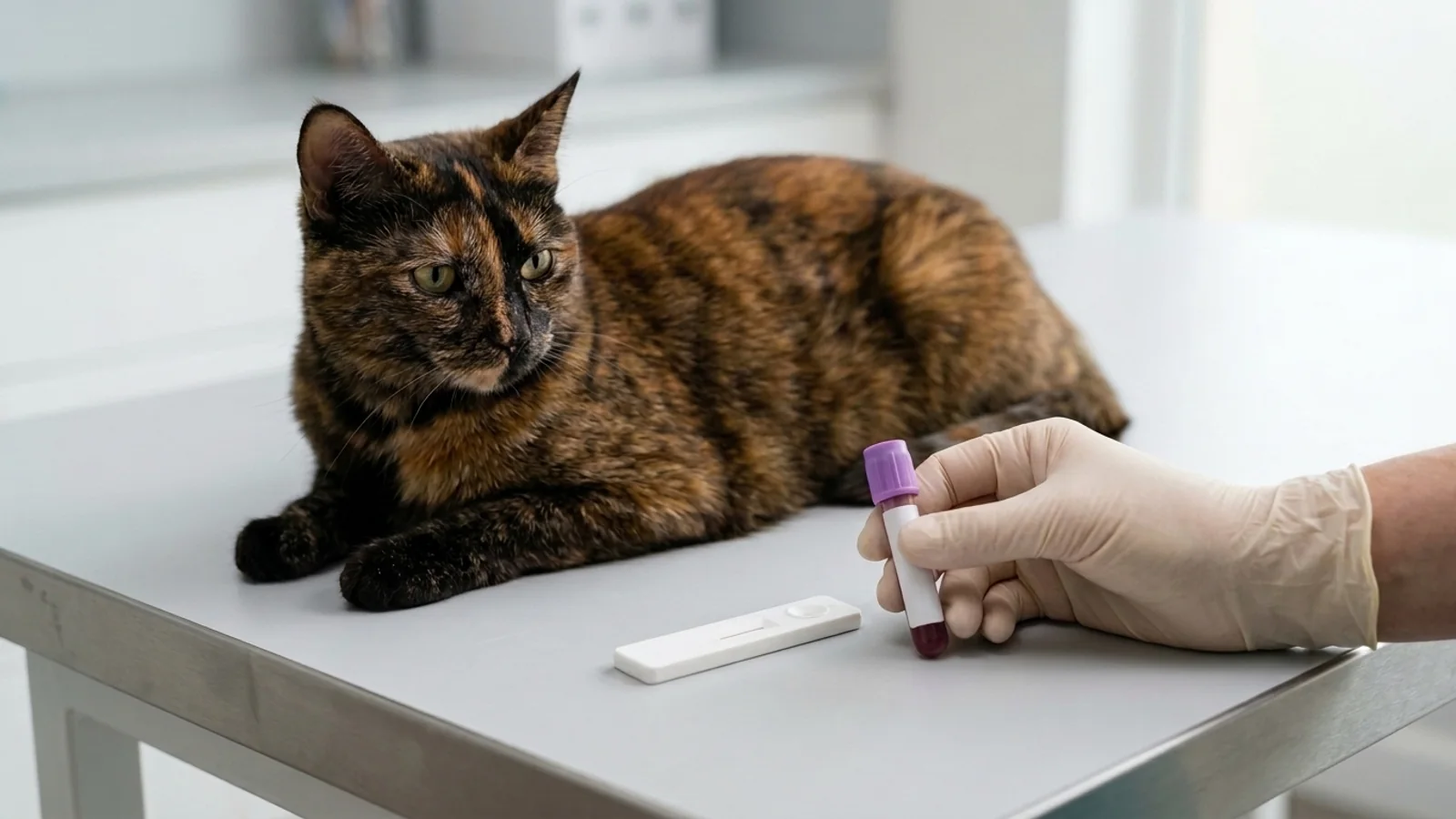
Mutant/Normal,MDR1/N, orn/M), the name of the testing laboratory, the specimen type (cheek swab or EDTA blood tube), and the date the report was issued (WSU WADDL; Collie Health Foundation).Ask your veterinary team to place the exact genotype in the chart's permanent alert banner: Have the clinic record both the laboratory's verbatim result code and the plain-English copy count (one mutant copy vs. two mutant copies, or two normal copies) in the medical and medication record, where prescription software displays patient warnings (Embark Veterinary; AAVSB 2025 Model Regulations).
Book a clinician-led medication and preventive review: Ask your veterinarian to check your dog's current monthly parasite preventives, any chronic prescriptions, and your household first-aid cabinet against the genotype. Over-the-counter loperamide (Imodium) should be avoided completely in any dog with one or two mutant copies, while FDA-approved monthly heartworm preventives remain safe when given strictly at label preventive doses (WSU WADDL: MDR1 in Dogs; Cornell Riney Canine Health Center).
Never adjust, split, or stop a prescribed medication yourself: Keep administering all currently prescribed medications and monthly heartworm preventives on schedule unless your veterinarian explicitly instructs you to change them (Cornell Riney Canine Health Center; Embark Veterinary).
Why 'MDR1 Positive' Is the Wrong Thing to Write Down
The single most common mistake made by both pet owners and clinic reception desks is recording a dog's genetic status as "MDR1 positive" or "MDR1 negative." As the Washington Animal Disease Diagnostic Laboratory (WADDL) at Washington State University explains, every dog and cat has the MDR1 gene (officially designated ABCB1, for ATP-binding cassette subfamily B member 1). Because every animal possesses the gene, every animal is technically "MDR1 positive." Saying a dog is "positive for MDR1" is like saying a dog is "positive for hemoglobin"—it fails to state whether the gene is normal or mutated.
The canine mutation was identified in 2001 by Dr. Katrina Mealey and colleagues: a 4-base-pair deletion in MDR1 (written ABCB1-1Δ in the research literature) that makes protein synthesis stop prematurely and leaves a nonfunctional drug transporter (AAHA NEWStat; Journal of Veterinary Internal Medicine, 2016). In a dog with two normal copies, that transporter—P-glycoprotein—works like an exhaust pump built into the blood-brain barrier, limiting how much of certain drugs reaches the brain. It is also present in the gut, liver, and kidneys, where it restricts drug absorption and promotes excretion (Collie Health Foundation).
When that pump is nonfunctional, drugs it normally handles can pass barriers that should keep them out and accumulate in the brain, and MDR1-mutant dogs absorb more and excrete less of those drugs than unaffected dogs (Collie Health Foundation). The drugs of concern include loperamide, ivermectin-class antiparasitics at high doses, some sedatives and antiemetics, and several chemotherapy agents (WSU WADDL). Reported signs of toxicity range from weakness, lethargy, incoordination (ataxia), disorientation, and tremors to seizures, blindness, and death (AAHA NEWStat; Collie Health Foundation; Cornell Riney Canine Health Center).
Crucially, every dog inherits two copies (alleles) of the MDR1 gene—one from each parent. That creates three distinct genotypes, not a binary yes/no result (Collie Health Foundation). According to Cornell's Riney Canine Health Center, a dog with two copies of the variant has only abnormal P-glycoprotein and may be severely affected, while a dog with one copy can still experience drug toxicity, although the effects are generally less severe. If an intake form simply says "MDR1 positive," an anesthesiologist or oncologist cannot tell whether the dog is heterozygous (Mutant/Normal) or homozygous mutant (Mutant/Mutant)—a distinction that can change sedation planning, drug selection, and monitoring.
Reading Your Result: Three Genotypes, Several Alphabets
Although every canine MDR1 test looks for the same 4-base-pair deletion in the ABCB1 gene, laboratories and commercial genetics companies do not share a single reporting alphabet. Depending on whether your dog was tested through Washington State University, LABOKLIN, Animal Genetics, or a consumer DNA panel, the same genotype may appear as words, slashes, capital letters, or risk labels.
Understanding the three underlying genotypes—and why laboratories disagree on the word "carrier"—prevents dangerous miscommunication when your dog's result is transcribed into a clinic chart:
Two Normal Copies (Homozygous Normal — Normal/Normal or n/n): The dog did not inherit the MDR1 mutation from either parent. The Collie Health Foundation says these dogs would not be expected to have unexpected adverse reactions to normal doses of ivermectin, loperamide, or some anticancer drugs, and Animal Genetics reports this result as "Clear." Even in a rough collie or Australian shepherd, a confirmed Normal/Normal genotype tells your veterinarian the dog does not have MDR1-related P-glycoprotein deficiency—though ordinary label precautions still apply, and Cornell notes that some drug combinations raise drug concentrations even in dogs without the variant (Cornell Riney Canine Health Center).
One Mutant Copy and One Normal Copy (Heterozygous — Mutant/Normal, MDR1/N, or n/M): The dog inherited one mutated allele and one normal allele. According to the Collie Health Foundation, these dogs may experience toxicity after normal doses of loperamide (Imodium), some anticancer drugs, and high doses of ivermectin (greater than 50 micrograms per kilogram, or mcg/kg). Animal Genetics adds that a dog with one copy has a 50% chance of passing the mutation to any given puppy.
Two Mutant Copies (Homozygous Mutant — Mutant/Mutant, MDR1/MDR1, or M/M): The dog inherited the mutated allele from both parents and has only abnormal P-glycoprotein (Cornell Riney Canine Health Center). The Collie Health Foundation says these dogs would be expected to experience toxicity after normal doses of loperamide, some anticancer drugs, and ivermectin above 50 mcg/kg. In a 2016 study, collies with this genotype were sedated significantly more deeply and for longer than normal collies after the same 0.04 mg/kg intravenous acepromazine dose (JVIM 2016).
Why Laboratories Disagree on the Word 'Carrier'
If your dog's genotype is heterozygous (one mutant copy and one normal copy), you may notice a sharp conflict in how sources describe your dog. The Collie Health Foundation describes MDR1 as an autosomal dominant disorder—only one copy of the mutant gene is needed for a dog to be affected—and concludes that "there is no such thing as an MDR1 carrier." In everyday genetics language, "carrier" usually signals a recessive trait in which one copy does not affect the animal itself and matters mainly for breeding. Because a dog with a single mutant allele is still at risk of adverse effects from common veterinary drugs, the Collie Health Foundation rejects the label.
At the same time, some laboratories still use the word. LABOKLIN (UK) describes heterozygous (MDR1/N) dogs as "carriers"—while warning on the same page that carriers may have sensitivity and should be treated with care, and recommending a 25% dose reduction for acepromazine and butorphanol in those dogs. Animal Genetics Inc. labels both heterozygous (n/M) and homozygous mutant (M/M) results "At Risk" in its results table, distinguishing one copy from two in the allele code, although its explanatory text still talks about breeding "carriers." Because of this terminology split, your dog's chart should never say "MDR1 carrier" by itself—it should state the exact allele code and copy count (for example, Mutant/Normal (MDR1/N), 1 mutant copy).
| Mutant Allele Count | Collie Health Foundation Wording | LABOKLIN (UK) Wording | Animal Genetics Wording | What the Sources Say It Means | Suggested Record Entry |
|---|---|---|---|---|---|
| 0 mutant copies (homozygous normal) | Normal/Normal (the 2016 JVIM study writes nor/nor) | Not shown on the test page; copy the report's wording exactly | n/n — "Clear" | Two normal copies; not expected to have unexpected adverse reactions to normal doses of ivermectin, loperamide, or some anticancer drugs (Collie Health Foundation). | MDR1 (ABCB1): Normal/Normal [lab code as issued] — 0 mutant copies + lab name, sample type, and report date |
| 1 mutant copy (heterozygous) | Mutant/Normal (WSU's terminology note writes "MDR1 mutant/normal"; JVIM: mut/nor) | MDR1/N (called a "carrier" by LABOKLIN) | n/M — "At Risk" | May experience toxicity after normal doses of loperamide, some anticancer drugs, and ivermectin above 50 mcg/kg (Collie Health Foundation); effects generally less severe than with two copies (Cornell). LABOKLIN advises a 25% acepromazine/butorphanol reduction (LABOKLIN); WSU routes dosing to MDR1Caddie (WSU WADDL). | MDR1 (ABCB1): Mutant/Normal [or MDR1/N or n/M, as issued] — 1 mutant copy (heterozygous) + lab name, sample type, and report date |
| 2 mutant copies (homozygous mutant) | Mutant/Mutant (JVIM: mut/mut) | MDR1/MDR1 | M/M — "At Risk" | Only abnormal P-glycoprotein (Cornell); toxicity expected after normal doses of loperamide, some anticancer drugs, and ivermectin above 50 mcg/kg (Collie Health Foundation); significantly deeper and longer sedation after 0.04 mg/kg IV acepromazine (JVIM 2016). LABOKLIN advises a 30%–50% acepromazine/butorphanol reduction (LABOKLIN). | MDR1 (ABCB1): Mutant/Mutant [or MDR1/MDR1 or M/M, as issued] — 2 mutant copies (homozygous mutant) + lab name, sample type, and report date |
What the Record Entry Should Contain — and Who Writes It
A genetic test report sitting in a kitchen drawer or buried in an email thread cannot protect a dog when a relief veterinarian calculates a pre-anesthetic sedative dose or an emergency clinician treats acute vomiting. To function as a clinical safety control, the result must be entered into the clinic's practice information management system (PIMS) by your veterinary team as a structured medical record entry—just as carefully as a clinician documents microbiology breakpoints when reviewing a culture and sensitivity report.
In the United States, the American Association of Veterinary State Boards (AAVSB) Model Regulations: Medical Recordkeeping, recommended by the AAVSB Regulatory Policy Committee in April 2025, set out a professional baseline for what belongs in a patient's chart. Where applicable, the model says every record should contain, at a minimum, information obtained by laboratory testing and the interpretation of those findings; any information received from a consultation, including the date and the consultant's name and contact information; and, for prescribed and dispensed medications, the drug name, dosage, strength, dose, frequency, quantity, and route of administration. It also says medical records must contain enough information to permit another veterinarian to proceed with the patient's care by reading the record—exactly the test an MDR1 entry has to pass when a relief or emergency veterinarian opens the chart.
Two important regulatory scope boundaries apply when you discuss recordkeeping with your clinic:
US state record-retention rules vary by jurisdiction: The AAVSB 2025 Model Regulations are a model framework recommended to state veterinary licensing boards, not an enacted federal statute, and the retention period itself is left as "X years" after the last patient encounter for each jurisdiction to set. Because MDR1 is a lifelong hereditary genotype, owners should keep their own digital and paper copy of the original laboratory report and check that the genotype alert travels with any veterinary medical records transfer to a new practice, boarding facility, or specialty hospital.
Registry-recording rules are distinct from clinical medical records: Some laboratory pages describe kennel-club recording rules that apply only in specific countries. LABOKLIN (UK), for example, notes that for UK-registered dogs in the Kennel Club's official DNA testing scheme, results are recorded and published by the Kennel Club only if the result report includes the dog's microchip or tattoo number along with its registered name or registered number. That rule governs UK pedigree recording and should not be confused with US state veterinary medical-record rules—although noting the specimen type and whether the sample was veterinarian-collected or home-swabbed is still helpful context in any chart.
If you ever inspect your dog's chart or patient portal and find that an earlier clinic typed "MDR1 positive" or "MDR1 carrier — no action needed" instead of the exact genotype, ask the practice to amend the alert line using the original laboratory PDF. The AAVSB model expects any update to be clearly identified and dated while the original content of the record is maintained (AAVSB 2025 Model Regulations), so the correction should appear as a dated amendment rather than a silent overwrite. Our guide to requesting a correction to your pet's medical record walks through how to submit supporting documentation.
| Record Field | What the Veterinary Team Should Record | What Never to Write | Why It Matters |
|---|---|---|---|
| 1. Verbatim Genotype & Copy Count | Exact laboratory result string plus copy count: e.g., MDR1 (ABCB1): Mutant/Normal (1 mutant copy, heterozygous) or MDR1/MDR1 (2 mutant copies, homozygous mutant). | "MDR1 positive," "MDR1 negative," or a bare "MDR1 carrier." | Every animal has the MDR1 gene (WSU WADDL), and sedation and toxicity differ between one and two copies (JVIM 2016; Collie Health Foundation). |
| 2. Laboratory Identity & Test Type | Name of the testing laboratory or panel provider (e.g., WSU PrIMe/WADDL, LABOKLIN, Animal Genetics, or the named consumer DNA panel) and whether the report carries a not-for-diagnosis disclaimer. | "Breeder said tested" or "DNA panel clear/affected" with no source attached. | WSU notes that many consumer panels say their results are not intended as a basis for diagnosis or treatment (WSU WADDL); the AAVSB model lists laboratory information and its interpretation among minimum record contents. |
| 3. Specimen Type & Collection | Cheek swab vs. veterinarian-collected EDTA (purple-top) whole blood, and whether the dog's identity (e.g., microchip) was checked at collection. | Omitting specimen origin on transferred or breeder-supplied reports. | Laboratories accept different specimens and collection settings (WSU PrIMe; WSU WADDL; LABOKLIN); a veterinarian-collected sample tells the next reader who confirmed the dog's identity. |
| 4. Report Date & Attached PDF | Date of the laboratory report, any accession number, and the original PDF stored in the patient's chart attachments. | An unverified verbal summary with no stored report. | The AAVSB model lists information obtained by laboratory testing among minimum record contents and expects records to let another veterinarian continue care by reading them. |
| 5. Clinician-Confirmed Drug Alert & Consult Log | For dogs with one or two mutant copies, a clinician note such as: avoid loperamide; label-dose heartworm preventives acceptable; check genotype-specific dosing (e.g., through MDR1Caddie) before acepromazine, butorphanol, maropitant, ondansetron, apomorphine, grapiprant, cyclosporine, or chemotherapy. Log any consultation date, consultant name, and contact. | "No ivermectin ever" (which wrongly blocks label-dose heartworm prevention) or owner self-dosing notes. | Matches WSU's problem-medication table and label-dose findings (WSU WADDL; WSU WADDL (2021)) and the AAVSB model's consultation and medication fields (AAVSB 2025). |
| 6. Critical-Care / HPA-Axis Note | For hospitalization: WSU states MDR1-mutant dogs have a blunted HPA axis, are prone to relative adrenal insufficiency when seriously ill, and benefit from physiologic doses of corticosteroids. | Limiting the MDR1 alert to antiparasitic drugs. | Puts WSU WADDL's critical-illness note in front of an emergency or specialty clinician who has never met the dog. |
Consumer DNA Panel or Diagnostic Lab: Does the Source Change What You Should Do?
Many dog owners first discover an MDR1 variant not because a veterinarian ordered a targeted pharmacogenetic test, but because a broad consumer breed-and-health DNA kit flagged MDR1 alongside coat traits and ancestry percentages. When you hand that report to your veterinarian, the source of the test affects how the clinician evaluates it—though it should never be ignored.
In its public guidance on MDR1 testing, Washington State University WADDL cautions that many multi-gene consumer DNA panel companies include explicit legal and regulatory disclaimers stating that their results are "not intended to be used as a basis to establish a diagnosis or treatment." By contrast, WSU positions its Program in Individualized Medicine (PrIMe) MDR1 assay as designed specifically for medical diagnosis and treatment, and describes itself on its service pages as providing dedicated clinical pharmacology counseling (WSU WADDL; WSU MDR1Caddie). Readers should note that WSU's statements describing its test as the "only" service designed for medical diagnosis and treatment or offering qualified clinical pharmacology counseling represent WSU's own positioning of its laboratory service rather than an independent head-to-head proficiency audit across laboratories.
At the same time, consumer DNA panel providers themselves urge owners to bring any MDR1 finding into the veterinary workflow. Embark Veterinary's MDR1 resource, for example, advises owners to share their dog's result with their veterinarian so the variant can be flagged in the medical file, notes that most once-monthly parasite preventatives can be used safely because the doses needed for prevention are lower than other applications, and tells owners to speak with a veterinarian before discontinuing or changing the dosage of any current medication.
To help your veterinarian evaluate your report—or to help you and your veterinarian choose a laboratory if confirmatory testing is needed—here is what the primary laboratory pages state regarding specimens, turnaround times, and listed fees as of October 14, 2026:
Washington State University PrIMe / WADDL (US university laboratory): Lists its PrIMe MDR1 test at $70 (US) as of October 14, 2026, including a cheek-swab kit (WSU WADDL). WSU says test purchasers and their veterinarians get 24/7 access to MDR1Caddie for dogs; its WhisPurr service covers cats, and both are monitored by Dr. Katrina Mealey (WSU WADDL). Accepted specimens are a home-collected cheek swab or a veterinarian-collected whole-blood sample of at least 2 mL in an EDTA purple-top tube (WSU PrIMe; WSU WADDL). Tests run in Tuesday batches: a sample that makes Tuesday's batch should have results that Wednesday, and WSU's ordering page says results typically arrive 2–7 business days after the sample is received. Results are reported only to the contact on the submission form (WSU PrIMe; WSU WADDL).
Animal Genetics Inc. (commercial genetic laboratory): Lists the canine MDR1 test at $45 with a 3–5 business-day turnaround and £40 with a 7–10 business-day turnaround as of October 14, 2026, and reports results as
n/n("Clear"),n/M("At Risk" — one copy), orM/M("At Risk" — two copies) (Animal Genetics Inc.).LABOKLIN (UK) (veterinary genetic laboratory): Lists its MDR1 test at £48 including VAT, with a stated 2–3 week turnaround, as of October 14, 2026; it accepts 0.5–1 mL of EDTA whole blood or buccal swabs, and its page writes mutant genotypes as
MDR1/NandMDR1/MDR1(LABOKLIN (UK)).
What does this mean if you are holding a consumer DNA panel result right now? Bring the complete report—including any fine-print disclaimer—to your veterinarian rather than setting it aside. A sensible plan to discuss is recording the panel finding as a provisional alert straight away (for example, keeping over-the-counter loperamide away from the dog) and then deciding together whether confirmatory testing through a diagnostic laboratory, such as WSU's cheek-swab or veterinarian-collected EDTA blood test, is worthwhile before elective anesthesia or a chemotherapy plan (WSU WADDL; Embark Veterinary).
What Each Genotype Changes for Medications
Once your dog's exact genotype is in the chart, it governs specific classes of P-glycoprotein substrate drugs. A critical principle of veterinary pharmacogenetics is that MDR1 sensitivity is both drug-specific and dose-dependent—and published drug lists from different laboratories do not always agree. Reviewing the primary evidence by drug category shows why your veterinarian needs both the exact genotype and the source of each dosing rule.
1. Over-the-Counter Loperamide (Imodium): Avoid in All Dogs With the Mutation
Every source reviewed here—WSU WADDL, the Collie Health Foundation, Cornell University's Riney Canine Health Center, and LABOKLIN—treats loperamide (Imodium and generic equivalents) as a drug to avoid rather than dose-adjust. WSU's wording is direct: at doses used to treat diarrhea, loperamide will cause neurological toxicity in dogs with the MDR1 mutation, and it should be avoided in all dogs with the MDR1 mutation, whether they carry one copy (Mutant/Normal) or two (Mutant/Mutant). Because loperamide is an over-the-counter anti-diarrheal (Animal Genetics), it belongs in the household-medicine conversation as well as on the clinic chart.
2. Heartworm Preventives vs. High-Dose Avermectins: Why Dose and Source Lists Diverge
Macrocyclic lactones—ivermectin, milbemycin oxime, moxidectin, and selamectin—are the source of the most widespread confusion among owners of herding-breed dogs. According to WSU WADDL's heartworm-prevention guidance and WSU's MDR1 in Dogs reference, all US-marketed monthly or injectable heartworm preventives containing ivermectin (such as Heartgard Plus), milbemycin (Interceptor), moxidectin (ProHeart, Simparica Trio, NexGard Plus, Advantage Multi), or selamectin (Revolution) have been tested in dogs with the MDR1 mutation as required by the US Food and Drug Administration (FDA) and are safe when administered strictly at label heartworm-prevention doses (WSU WADDL; Collie Health Foundation; Cornell). WSU adds that for other formulations of ivermectin or milbemycin—anything other than the labeled preventive product—owners and veterinarians should contact MDR1Caddie for dosing recommendations (WSU WADDL).
Danger arises at higher doses. WSU and the Collie Health Foundation point to the doses used to treat mange, and Cornell lists unintended exposure—such as ivermectin used to deworm horses—among the situations that can have severe consequences (WSU WADDL; Collie Health Foundation; Cornell). The Collie Health Foundation puts a number on it: Mutant/Normal dogs may experience toxicity, and Mutant/Mutant dogs would be expected to, at ivermectin doses greater than 50 micrograms per kilogram (50 mcg/kg).
3. Isoxazolines, Spinosad Combinations, and P-Glycoprotein Drug Interactions
For flea and tick control, WSU WADDL and the Collie Health Foundation report that the manufacturers of isoxazoline products (afoxolaner, fluralaner, lotilaner, and sarolaner) tested them in dogs with the MDR1 mutation and observed no adverse effects; for most of these products the sources add that MDR1 dogs are not at increased risk. Ordinary product-label precautions still apply. By contrast, WSU WADDL warns that combination flea and heartworm products containing spinosad should be used cautiously in dogs that are MDR1 mutant/normal because of a risk of serious drug-drug interactions (see our analysis of Trifexis and Comfortis (spinosad) FDA adverse-event reports and our overview of the most-reported veterinary drug ingredients in the FDA database).
Both WSU WADDL and Cornell's Riney Canine Health Center explain why a full medication review matters: drugs that are safe on their own can cause an adverse reaction when given together. Cornell names ketoconazole, cyclosporine, and spinosad (Comfortis) as examples of combinations that can increase drug concentrations and risk—even in dogs without the genetic variant. A genotype entry is most useful when the reviewing clinician can also see every other medication the dog takes.
4. Sedatives, Antiemetics, Analgesics, and Chemotherapy: Why One Copy vs. Two Copies Matters
Beyond antiparasitics and loperamide, the MDR1 genotype matters whenever a dog needs pre-anesthetic sedation, perioperative pain control, anti-nausea therapy, osteoarthritis management, or cancer treatment. A 2016 study published in the Journal of Veterinary Internal Medicine (Deshpande et al., 2016), in which sedation was scored without knowledge of each dog's genotype, illustrates why recording the exact allele count (Mutant/Normal vs. Mutant/Mutant) beats a binary "affected" label.
In that study, investigators gave 0.04 mg/kg intravenous acepromazine to 29 rough-coated collies in three genotype groups: 10 homozygous mutant (mut/mut), 10 heterozygous (mut/nor), and 9 homozygous normal (nor/nor). Homozygous mutant collies were sedated significantly more deeply and for longer over 6 hours (area under the sedation-score curve, P = .028) than normal collies, and the authors concluded that acepromazine dose rates should be reduced, with careful monitoring, in mut/mut dogs. Heterozygous collies had numerically higher sedation scores that were not statistically different from normal dogs (P = .45) at that single dose. The authors also cautioned that opioids are thought to be P-glycoprotein substrates, so sedative-opioid combinations may produce deeper and longer sedation than they observed with acepromazine alone (JVIM 2016).
Different reference organizations translate these genotype differences into clinical dosing workflows in two distinct ways:
WSU WADDL's Peer-Reviewed Problem-Medication List and MDR1Caddie Consultation: WSU says its problem-medication list includes only drugs that have undergone peer-reviewed publication and is updated as new research appears (WSU WADDL: MDR1 in Dogs). For sedatives and analgesics (acepromazine, butorphanol), the emetic apomorphine, antiemetics (maropitant, ondansetron), cyclosporine, grapiprant, and chemotherapy agents (doxorubicin, vinblastine, vincristine, vinorelbine), WSU's table does not publish fixed percentages; it directs owners and veterinarians to contact MDR1Caddie for dosing recommendations (WSU WADDL; Collie Health Foundation).
LABOKLIN (UK)'s Genotype-Stratified Percentage Reductions for Acepromazine and Butorphanol: On its UK genetic test page, LABOKLIN (UK) notes that acepromazine and butorphanol tend to cause more profound and prolonged sedation in MDR1 dogs and recommends reducing the dose by 25% in heterozygous (MDR1/N) dogs and by 30% to 50% in homozygous (MDR1/MDR1) dogs. Both drugs sit in its Class B ("use only under close control of veterinarian") alongside chemotherapy agents, cyclosporine A, digoxin, morphine, ondansetron, erythromycin, dexamethasone, and others, while loperamide and the ivermectin, doramectin, and moxidectin products named in Class A are not to be used.
| Medication / Drug Class | Normal/Normal (n/n — 0 Mutant Copies) | Mutant/Normal (MDR1/N, n/M — 1 Mutant Copy) | Mutant/Mutant (MDR1/MDR1, M/M — 2 Mutant Copies) | Attributed Source (as of 2026-10-14) |
|---|---|---|---|---|
| Loperamide (Imodium) — OTC anti-diarrheal | Standard veterinary label/formulary rules apply. | Avoid. WSU: neurological toxicity at doses used to treat diarrhea. | Avoid. WSU: neurological toxicity at doses used to treat diarrhea. | Consistent across WSU WADDL, Collie Health Foundation, Cornell, and LABOKLIN (Class A). |
| US Heartworm Preventives at Label Doses (ivermectin, milbemycin, moxidectin, selamectin) | Safe at label preventive doses. | Safe at label preventive doses per WSU, Cornell, and the Collie Health Foundation; other formulations need MDR1Caddie guidance (WSU). | Safe at label preventive doses per WSU, Cornell, and the Collie Health Foundation; give exactly as labeled for the dog's weight. | WSU WADDL (2021); WSU MDR1 in Dogs; Collie Health Foundation; Cornell. LABOKLIN's UK list allows selamectin, Milbemax, and Advocate only in the permitted form and dose (Class C) (LABOKLIN). |
| High-Dose or Non-Preventive Ivermectin-Class Exposure (mange-treatment doses, >50 mcg/kg, equine dewormers) | Managed under standard veterinary dosing limits. | May experience toxicity above 50 mcg/kg ivermectin (CHF); AAHA recommends an alternative drug when possible. | Toxicity expected above 50 mcg/kg ivermectin (CHF); if no alternative exists, AAHA points to WSU consultation for individual dosing. | Collie Health Foundation; WSU WADDL; AAHA NEWStat (2024); Cornell (horse-dewormer exposure). |
| Spinosad Combination Products & Interacting Drugs (spinosad + heartworm preventive; ketoconazole; cyclosporine) | Cornell: some combinations raise drug concentrations even without the variant. | Use cautiously: WSU flags spinosad combination products in mutant/normal dogs for serious drug-drug interaction risk. | Clinician review before combining: the interaction risks WSU and Cornell describe apply here too. | WSU WADDL; Cornell Riney Canine Health Center. |
| Isoxazoline Flea & Tick Products (afoxolaner, fluralaner, lotilaner, sarolaner) | Standard label precautions apply. | Manufacturer testing in MDR1 dogs: no adverse effects observed. | Manufacturer testing in MDR1 dogs: no adverse effects observed. | WSU WADDL; Collie Health Foundation. |
| Acepromazine & Butorphanol — sedative / opioid pre-medication | Standard veterinary dosing and anesthetic monitoring. | Clinician dose adjustment and monitoring: LABOKLIN advises a 25% dose reduction; WSU routes dosing to MDR1Caddie. (In JVIM 2016, 0.04 mg/kg IV acepromazine alone produced numerically higher but not significantly different sedation, P = .45.) | Significantly deeper and longer sedation (P = .028 in JVIM 2016); the authors advise reduced doses and careful monitoring. LABOKLIN advises a 30%–50% dose reduction; WSU routes dosing to MDR1Caddie. | Deshpande et al., JVIM 2016; LABOKLIN (UK); WSU WADDL. |
| Emetic, Antiemetics & Others on WSU's List (apomorphine, maropitant, ondansetron, grapiprant, cyclosporine) | Standard veterinary dosing. | Clinician-managed dosing: on WSU's problem-medication list; the veterinarian consults MDR1Caddie. | Clinician-managed dosing: on WSU's problem-medication list; the veterinarian consults MDR1Caddie. | WSU WADDL; Collie Health Foundation; WSU MDR1Caddie. |
| Chemotherapy Agents (doxorubicin, vinblastine, vincristine, vinorelbine) | Standard veterinary oncology protocols. | Toxicity possible after normal doses of some anticancer drugs (CHF); dosing through the veterinarian / MDR1Caddie. | Toxicity expected after normal doses of some anticancer drugs (CHF); dosing through the veterinarian / MDR1Caddie. | WSU WADDL; Collie Health Foundation; Animal Genetics. |
The Medication Review: What to Ask Your Veterinary Team to Do With the Result
A genotype entry in the record becomes clinically useful when your veterinarian links it to an active medication-review workflow. Whether your dog was just tested as a puppy before a spay or neuter procedure or diagnosed as an adult before starting chronic therapy, walk through four concrete steps with your veterinary team:
Verify the chart alert and problem-list entry together: Ask the technician or veterinarian to read back how the result appears on the PIMS patient header. Confirm that it shows the exact genotype (for example,
MDR1 Mutant/Normal — 1 mutant copyorMDR1 Mutant/Mutant — 2 mutant copies), the testing laboratory, the sample type, and the report date—not just "MDR1 positive" (WSU WADDL; Embark Veterinary).Reconcile current preventives and home medications before making any change: Have your veterinarian review every monthly heartworm, flea, and tick product your dog receives—for instance, routine heartworm prophylaxis prescribed after an annual 4DX screening test. Keep giving FDA-approved monthly preventives at their label dose unless your veterinarian tells you otherwise, flag any spinosad combination products or concurrent P-glycoprotein inhibitors (such as ketoconazole or cyclosporine), and remove over-the-counter loperamide from your dog's travel or emergency kit (WSU WADDL; Cornell).
Pre-plan sedation, anti-nausea, and pain protocols with MDR1Caddie or pharmacology support: Before an elective dental cleaning, orthopedic radiograph, spay/neuter, or oncology consult, ask your veterinarian to note the genotype-adjusted pre-medication plan in the chart. If your dog's test was purchased through Washington State University, WSU says you and your veterinarian get 24/7 access to MDR1Caddie, which offers genotype-based drug dosing guidance and a submit-a-question feature; WSU's cat equivalent is WhisPurr, and both are monitored by Dr. Katrina Mealey (WSU WADDL; WSU MDR1Caddie). When your veterinarian uses an outside consultation, the AAVSB model expects the date and the consultant's name and contact information to be logged in the record alongside the resulting plan (AAVSB 2025 Model Regulations).
Add the relative adrenal insufficiency note for emergency and ICU care: One of the less familiar points on WSU WADDL's MDR1 in Dogs page has nothing to do with antiparasitic drugs. WSU states that the MDR1 mutation is associated with a blunted hypothalamic-pituitary-adrenal (HPA) axis, so affected dogs are especially prone to relative adrenal insufficiency when they are seriously ill, and that they benefit from physiologic doses of corticosteroids. Recording that note beside the genotype puts it in front of an emergency clinician who has never met your dog; whether and how to give corticosteroids remains that clinician's decision.
flowchart TD
  A["Receive MDR1 (ABCB1) Test Report"] --> B{"Verify Report Source & Wording"}
  B -->|"Diagnostic Lab (e.g., WSU PrIMe, LABOKLIN, Animal Genetics)"| C["Extract Verbatim Genotype Code (Normal/Normal, Mutant/Normal, or Mutant/Mutant), Lab Name, Sample Type & Date"]
  B -->|"Consumer DNA Panel (Check Diagnostic Disclaimer)"| D["Share Full Report With Veterinarian; Flag Preliminary Genotype & Decide on Diagnostic Confirmation"]
  C --> E["Veterinary Team Enters Exact Genotype + Copy Count + Lab Metadata into PIMS Alert Banner"]
  D --> E
  E --> F{"Genotype Allele Count"}
  F -->|"0 Mutant Copies (Normal/Normal, n/n)"| G["Record Normal MDR1 Status; Standard Dosing; Usual Drug-Combination Cautions Still Apply"]
  F -->|"1 Mutant Copy (Mutant/Normal, MDR1/N, n/M)"| H["Clinician Medication Review: Avoid Loperamide; Keep Label-Dose Heartworm Preventives; Caution With Spinosad Combinations; Vet / MDR1Caddie Dosing for Sedatives, Antiemetics & Chemo; Add HPA-Axis Note"]
F -->|"2 Mutant Copies (Mutant/Mutant, MDR1/MDR1, M/M)"| I["High-Alert Clinician Review: Avoid Loperamide & High-Dose Ivermectin; Keep Label-Dose Heartworm Preventives; Vet / MDR1Caddie Dosing for Sedatives, Antiemetics & Chemo; Add HPA-Axis Note"]Who Should Be Tested — Breeds, Mixed Breeds, and Cats
AAHA NEWStat headlined its 2024 overview with the old rule of thumb "white feet don't treat" (AAHA NEWStat), but appearance is a poor guide in both directions. WSU estimates that about three of every four collies in the United States have the mutant gene (WSU WADDL)—so roughly one in four does not, and nothing about a collie's coat or markings shows which group it belongs to. Breed-based guessing can therefore expose an untested mutant dog to standard doses of problem drugs, or lead a clinician to withhold first-choice analgesia or chemotherapy dosing from a dog that is genetically normal. In the other direction, WSU's breed table lists about 5% of mixed-breed dogs (and 10% of herding-breed crosses) with the mutation, AAHA cites up to 10% of mixed-breed dogs, and AAHA notes that even dogs that do not obviously look like herding mixes can be homozygous (WSU WADDL; AAHA NEWStat).
Published prevalence figures vary across references—sometimes substantially, as with long-haired whippets. Rather than relying on a single unattributed number, the table below compares the approximate figures reported by WSU WADDL and AAHA NEWStat (January 2024):
| Breed or Species Group | WSU WADDL Approximate Frequency | AAHA NEWStat (Jan 2024) Figure | Clinical Testing & Record Note |
|---|---|---|---|
| Collie | About 70% (WSU's text: roughly three of every four U.S. collies) | Up to 70% | Highest-prevalence breed; individual genotyping still separates Normal/Normal, Mutant/Normal, and Mutant/Mutant dogs (WSU WADDL; AAHA NEWStat). |
| Long-haired Whippet | About 50% | 65% | The clearest example of sources disagreeing; record the individual result, not a breed estimate (WSU WADDL; AAHA NEWStat). |
| Australian Shepherd (standard and miniature) | About 50% (both listed) | No breed-specific figure (up to 50% of other herding breeds) | Record the exact allele count in the chart (WSU WADDL; AAHA NEWStat). |
| Silken Windhound & McNab | About 30% each | 30% each | Test before elective sedation or a change of antiparasitic product (WSU WADDL; AAHA NEWStat). |
| English Shepherd | About 15% | 15% | Moderate prevalence; individual testing prevents breed-guess errors (WSU WADDL; AAHA NEWStat). |
| Shetland Sheepdog (Sheltie) | About 15% | Named as a herding breed; no breed-specific figure | Moderate prevalence; individual testing prevents breed-guess errors (WSU WADDL; AAHA NEWStat). |
| German Shepherd Dog | About 10% | 10% | Often overlooked as an MDR1 breed; worth testing before chemotherapy or cyclosporine therapy (WSU WADDL; AAHA NEWStat). |
| Border Collie | Under 5% | Not listed | Despite the name, WSU's estimate is far lower than for Collies—another reason not to infer genotype from a breed name (WSU WADDL). |
| Mixed-Breed Dogs | About 5% (herding-breed crosses: about 10%) | Up to 10% | May not resemble herding dogs; testing is the only way to know an individual dog's genotype (WSU WADDL; AAHA NEWStat). |
| Domestic Cats (feline ABCB1 nonsense mutation) | Around 4% of cats; tested through WSU PrIMe / WADDL with WhisPurr guidance | Up to 4% (mutation identified in 2015) | Distinct feline mutation; do not extrapolate canine dose thresholds to cats (WSU WADDL; WSU WADDL; AAHA NEWStat). |
A Separate Note on Cats: Why Canine MDR1 Thresholds Cannot Be Extrapolated
Because Washington State University's ordering pages cover both dogs and cats (WSU PrIMe; WSU WADDL), cat owners occasionally land on canine MDR1 drug charts after receiving a feline result. In 2015, researchers identified a distinct nonsense mutation in the feline MDR1 (ABCB1) gene, present in up to 4% of cats (AAHA NEWStat). The feline evidence base is still thin: WSU says Dr. Mealey's team is still researching which cat breeds are most affected (WSU WADDL), and AAHA notes that published feline evidence includes case reports of sensitivity to eprinomectin and ivermectin (AAHA NEWStat).
Never apply a canine microgram-per-kilogram threshold or a canine percentage dose-reduction rule to a cat. If a cat is tested for the feline MDR1 mutation, the exact feline genotype should be entered into the cat's medical chart and any medication or parasiticide question routed through the cat's veterinarian and WSU's feline-specific WhisPurr consultation service (WSU WADDL).
Sources
How to order and submit your MDR1 test for dogs and cats — Washington State University College of Veterinary Medicine, Program in Individualized Medicine (PrIMe). Accessed October 14, 2026.
MDR1 | Washington Animal Disease Diagnostic Laboratory — Washington State University WADDL (test pricing, Tuesday batch schedule, specimen requirements, and MDR1Caddie/WhisPurr access). Accessed October 14, 2026.
MDR1 testing | Washington Animal Disease Diagnostic Laboratory — Washington State University WADDL (terminology guidance on why all animals have the MDR1 gene and consumer DNA panel diagnostic disclaimers). Accessed October 14, 2026.
MDR1 in Dogs | Washington Animal Disease Diagnostic Laboratory — Washington State University WADDL (peer-reviewed problem-medication list, FDA heartworm-preventive safety, breed frequencies, and relative adrenal insufficiency / blunted HPA axis note). Accessed October 14, 2026.
Are heartworm prevention products safe if my dog has the MDR1 mutation? — Washington State University WADDL (FDA testing of preventive doses vs. mange doses and spinosad combination caution in MDR1 mutant/normal dogs). Accessed October 14, 2026.
MDR1 — Collie Health Foundation — Collie Health Foundation (Normal/Normal, Mutant/Normal, and Mutant/Mutant genotype definitions, "no such thing as an MDR1 carrier" position, and >50 mcg/kg ivermectin threshold). Accessed October 14, 2026.
White feet don't treat: Considerations for dogs with MDR1 mutations — American Animal Hospital Association (AAHA NEWStat, January 2024; 2001 4-base-pair deletion discovery, P-glycoprotein mechanism, breed and mixed-breed prevalence, and 2015 feline nonsense mutation). Accessed October 14, 2026.
The Effect of the Canine ABCB1-1Δ Mutation on Sedation after Intravenous Administration of Acepromazine — Deshpande D, Hill KE, Mealey KL, Chambers JP, Gieseg MA. Journal of Veterinary Internal Medicine. 2016;30(2):636-641 (blinded trial in 29 rough-coated collies). Accessed October 14, 2026.
MDR1 Gene Variant / Ivermectin Sensitivity (ABCB1) — LABOKLIN (UK) (MDR1/N and MDR1/MDR1 genotype codes, 25% and 30%–50% acepromazine/butorphanol dose-reduction guidance, Class A/B/C drug tables, and UK Kennel Club recording requirements). Accessed October 14, 2026.
Multi-Drug Resistance (MDR1) — Animal Genetics — Animal Genetics Inc. (n/n "Clear" and n/M, M/M "At Risk" genotype reporting, US/UK pricing, and turnaround schedule). Accessed October 14, 2026.
How to Talk to Your Veterinarian About Your Dog's MDR1 Result — Embark Veterinary (flagging the variant in the medical file and consulting a veterinarian before changing any medication). Accessed October 14, 2026.
MDR1Caddie | Program in Individualized Medicine — Washington State University College of Veterinary Medicine (24/7 genotype-based drug dosing consultation portal for owners and veterinary teams). Accessed October 14, 2026.
Model Regulations: Medical Recordkeeping (April 2025) — American Association of Veterinary State Boards (AAVSB) (minimum record contents for laboratory testing, interpretation, consultations, and prescribed/dispensed medications; dated amendments; record sufficiency for another veterinarian; jurisdiction-set retention). Accessed October 14, 2026.
Drug sensitivity: MDR1 | Cornell University College of Veterinary Medicine — Cornell University Riney Canine Health Center (P-glycoprotein mechanism, one-copy vs. two-copy effects, heartworm preventive safety, loperamide avoidance, and drug-combination interactions). Accessed October 14, 2026.