A Coggins Test Before Horse Travel: Matching Papers to Destination Rules
Before hauling a horse across state lines, verify your Coggins test date, laboratory accession, and physical markings against the specific entry rules of your destination.

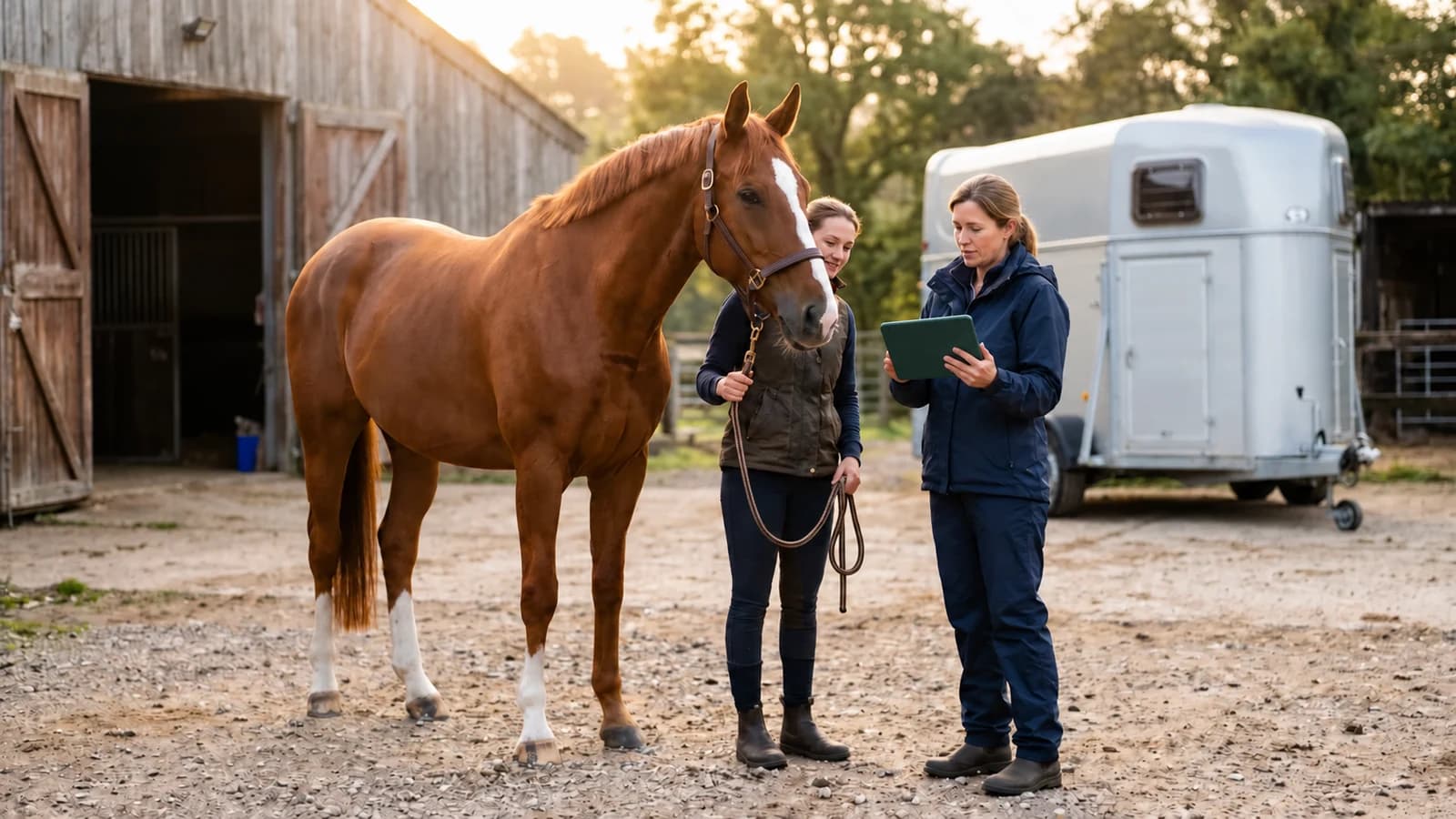
Before hauling your horse, check three things: the Coggins report identifies the animal you are taking, the negative test meets your destination’s time limit, and any required health certificate covers the trip. A report that worked for last month’s show may not meet the requirements for your next destination. The practical question is which documents that particular movement requires.
There is no single Coggins expiration period for every trip. The USDA’s 2007 Equine Infectious Anemia Uniform Methods and Rules recommends 12-month interstate testing intervals pending risk-based programs. That document is program guidance, rather than a nationwide travel authorization. State entry rules, event requirements, and international rules need separate checks. USDA APHIS Veterinary Services.
What a Coggins Report Actually Is
Coggins originally refers to the agar gel immunodiffusion test, or AGID, for equine infectious anemia (EIA). Approved ELISA formats are also used. Both look for antibodies; owners may hear “Coggins papers” used broadly for the official EIA report. Check the actual method and result instead of relying on the nickname. USDA APHIS Veterinary Services.
EIA affects equids, including horses, ponies, donkeys, and mules. Infected survivors remain carriers for life, sometimes without outward signs. There is no treatment or vaccine. APHIS says a horse may take 60 days or more after infection to test positive, so a negative result cannot exclude every recent infection. A horse that looks healthy still needs the required testing and documentation. USDA APHIS.
Blood-feeding flies can spread EIA, as can contaminated needles, syringes, and instruments. APHIS now identifies human-facilitated transmission as the most common route in the United States. An older emphasis on biting flies alone misses that warning. Tell your veterinarian about suspected exposure or illness rather than treating an unexpired report as proof that travel is safe. USDA APHIS.
Who Orders the Test and What the Lab Needs
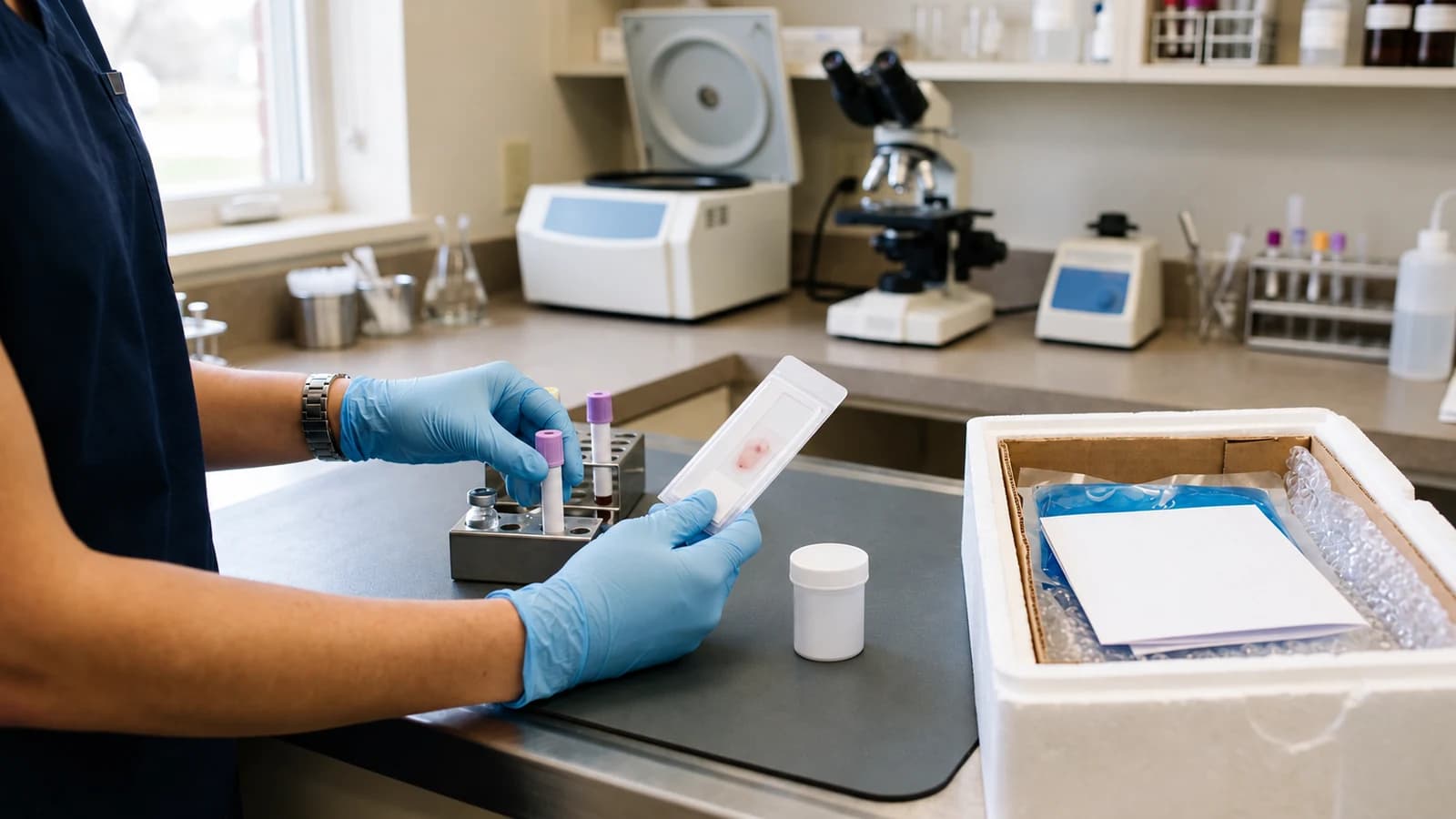
Arrange official testing through a Category II USDA-accredited veterinarian authorized in the state where the sample is collected. APHIS requires the veterinarian’s National Accreditation Number and an approved paper or electronic VS Form 10-11 submission to an approved laboratory. Owners should arrange the appointment and supply accurate records; clinical collection and official submission belong with authorized professionals. USDA APHIS.
Cornell’s Animal Health Diagnostic Center also recognizes state or federal animal health officials as authorized submitters. It says all EIA tests are official, with a fully completed official form; informal preliminary screening is prohibited. For kits described on its page, Cornell accepts serum and specifies refrigerated storage at 2–8°C for up to 28 days. It separately reports the USDA restriction against testing samples over 30 days old, including frozen samples. These limits concern whether a specimen can be tested, not how long a completed report works for travel. Your veterinarian should confirm the receiving laboratory’s current requirements. Cornell University Animal Health Diagnostic Center.
Ask the clinic when the completed official report will be available, including shipping, laboratory receipt, and paperwork review. Kansas State notes that ELISA can be performed within hours while AGID takes longer, but same-day service depends on getting the sample and forms to the facility in time. An assay’s processing time is not a promised door-to-door turnaround. Kansas State Veterinary Health Center.
Why the Blood-Draw Date Matters
Identify the collection date on your report and compare it with the relevant movement date. Florida explicitly measures its 12-month EIA window from blood collection. Other examples below refer to entry, shipment, or return to the United States. Keep that reference point beside each deadline; the date you download or print the report does not give the test a new age. Florida Department of Agriculture and Consumer Services.
As a planning example, a test collected 100 days before shipment is younger than a 12-month limit but older than Hawaii’s 90-day shipment limit. That comparison illustrates why a report can remain useful for one destination while requiring replacement for another. It does not establish eligibility for either trip: identity, certificate requirements, and other entry conditions still need review. State of Hawaii Department of Agriculture, Animal Industry Division.
Match the Horse to Its Identification
Under 9 CFR § 86.4, ordinary interstate equine identification options include a sufficiently detailed physical description, ISO 11784/11785 electronic identification, qualifying non-ISO electronic identification implanted on or before March 11, 2014, or sufficient digital photographs. A separate provision concerns commercial slaughter transport. The regulation does not require every traveling horse to have an 840-prefix microchip, and an electronic certificate is not a separate identification method. Legal Information Institute, Cornell University (9 CFR § 86.4).
A description includes identifying characteristics such as name, age, breed, color, sex, and distinctive markings, with permanent features recorded when present. If identity is questioned at arrival, the destination’s state or tribal animal health official or an APHIS representative may decide whether the description is sufficient. The federal text does not impose one nationwide number of photographs. Legal Information Institute, Cornell University (9 CFR § 86.4).
Compare the animal with the report before the appointment is finalized. Check that the face, legs, coat description, and any recorded brand, tattoo, or chip identify this horse. Kansas State advises removing blankets and making leg markings visible for clear photographs. This is a chance to catch a mismatch while the submitting team can address it. Kansas State Veterinary Health Center.
For international travel, APHIS says the description on the export certificate must match the EIA test form. Put both records beside one another and flag inconsistent markings or identification numbers for the veterinarian. Ask the issuing team to reconcile differences before departure so both records clearly identify the same animal. USDA APHIS National Veterinary Accreditation Program.
If you find an error after reporting, contact the submitting veterinarian and laboratory. Cornell allows amendments at laboratory discretion only when received within 30 days of the draw date, earlier copies are returned, and ownership is not being changed. That is a controlled correction process, not permission for an owner to alter a PDF. The team must decide whether correction or repeat testing is needed. Cornell University Animal Health Diagnostic Center.
Match the Rule: Destination Examples
The examples below were checked on October 27, 2026. They separate the EIA test window from accompanying documents and apply only to the named situations. The California and Hawaii documents are dated 2024; their dates are shown so readers can distinguish the document’s edition from this review. Use the full official instructions for the planned trip, including any current disease restrictions.
| Movement or activity | EIA test window | Separate document or follow-up requirement |
|---|---|---|
| California entry | Negative EIA within 12 months before entry | Inspection within 30 days for a standard CVI; six-month EECVI option when not changing ownership. No pending EIA tests. CDFA, October 2024 |
| Florida entry | Negative EIA within 12 months of blood collection | Official CVI must accompany the horse to its final destination. The cited page supplies no general CVI day limit. Check current timing separately. FDACS movement requirements |
| Hawaii shipment | Negative Coggins or other approved EIA test within 90 days | Inspection and CVI issuance within seven days before shipment; original hardcopy required. Post-arrival isolation and EIA testing at 45–60 days. Hawaii, September 2024 |
| Kansas exhibitions and ownership changes | Negative test within the previous 12 months | Applies to in-state exhibition horses too. If several tests fall in the window, only the latest is valid. Confirm entry documents separately. Kansas State, June 2025 |
| U.S.-origin horse returning from Canada | Negative EIA drawn within 180 days before U.S. return | Original export certificate and return scenario matter; see the qualified event provision below. This is not Canada’s entry-test window. APHIS return requirements |
California’s 12-month EIA window and six-month EECVI option are different clocks. Its fact sheet places the EECVI option under exemptions when ownership is not changing. It also describes a Working Horse Permit for specified ranch-related movement with Nevada or Idaho. Those limited options should not be treated as a general six-month Coggins rule or a permit for every trip. California Department of Food and Agriculture, Animal Health and Food Safety Services.
Florida also applies EIA requirements to movement within the state, assemblies such as boarding stables and shows, and breeding stock. At ownership transfer, the current owner’s original or laboratory-certified negative report must go with the horse. Assembly organizers keep specified records for two years. Staying inside one state therefore does not automatically remove the paperwork question. Florida Department of Agriculture and Consumer Services.
Kansas State describes exhibition and ownership-change requirements introduced in January 2025. A horse with a qualifying current negative test need not automatically be retested at sale if the seller transfers the report. Ask the veterinarian or event office about the actual activity and latest result, rather than assuming that every sale requires a new sample. Kansas State Veterinary Health Center.
Hawaii’s document contains requirements beyond the EIA and CVI clocks, including vaccination, parasite-control certification, and disease statements. Plan the post-arrival isolation and retest with a Hawaii veterinarian as well as the outbound paperwork. The table is a comparison of selected deadlines, not a complete Hawaii import checklist. State of Hawaii Department of Agriculture, Animal Industry Division.
Crossing to Canada: Keep the Return Plan Separate
For horses going to Canada, APHIS describes export health certificates as valid for 30 days from the accredited veterinarian’s inspection date, which may differ from the signing date. The current Canada export page provides certificate options and required addenda. Have the veterinarian select the applicable form and obtain required endorsement; an EIA report alone does not replace the export certificate. USDA APHIS National Veterinary Accreditation Program; USDA APHIS.
On the U.S. return side, APHIS requires a negative EIA drawn within 180 days before return. It distinguishes repeated re-entry during the original certificate’s 30-day validity from a special provision for U.S. horses attending recognized competitions or events for no more than 90 days. That provision requires residence only at events with horses under similar health requirements and includes a U.S. port veterinary inspection, arranged at least three business days ahead. It is not a general 90-day allowance for every stay. USDA APHIS.
Horses exceeding that event provision’s 90-day limit need a Canadian-issued certificate to return. APHIS also accepts AGID and ELISA for Canadian horses under its Canadian health-certificate requirements. Confirm the applicable return route before leaving. The 180-day figure here is the U.S. return requirement; it does not establish Canada’s EIA entry window for a U.S.-origin horse. USDA APHIS.
Certificate changes also have a defined scope. APHIS’s October 1, 2026 model-certificate notice concerns qualifying equines imported into the United States; the linked model is for countries other than Canada and Mexico. It should not be used to replace the Canada-specific return instructions. This distinction is another reason to start with the page for the actual origin, destination, and movement purpose. USDA APHIS.
If a Result Is Positive or Suspect
Stop ordinary travel arrangements and contact the veterinarian immediately. The UMR calls for quarantine within 24 hours after a positive official result is known, allowing confirmation while preventing further exposure. It describes AGID or reference-laboratory confirmation of positive ELISA results. Confirmation is not a promise that every initial positive will disappear, or a reason to continue moving the horse meanwhile. USDA APHIS Veterinary Services.
CDFA describes confirmed positive equids as requiring euthanasia or lifelong quarantine at least 200 yards from EIA-negative equids. Its current case notices show exposed horses remaining restricted pending retesting. The responsible animal health officials determine the exposed group, testing schedule, and release. An owner should not decide that another horse’s old negative report releases it from an exposure investigation. California Department of Food and Agriculture, Animal Health Branch.
Federal reactor movement is separately restricted by 9 CFR § 75.4. It provides specified routes to slaughter, a diagnostic or research facility, the home farm, or through one approved stockyard under stated conditions. Official identification generally uses the state’s USDA National Uniform Tag code number plus A, not its postal abbreviation. The regulation includes a specific identification exception for direct slaughter movement under permit in an officially sealed conveyance. Do not apply that exception to routine transport or attempt to organize reactor movement yourself; officials must arrange the required approvals and documents. Legal Information Institute, Cornell University (9 CFR § 75.4).
A Pre-Trip Crosscheck You Can Repeat
Make one travel record for each horse and each planned movement. The following is a practical way to organize the checks above; it does not issue travel permission. Give the veterinarian the complete itinerary, including a sale, overnight stop, event, border crossing, or changed return date that could affect the applicable documents.
Identify the animal. Compare the horse with the official report, photographs, description, and any recorded chip or brand. Ask the submitting team to resolve discrepancies; keep the issued record intact.
Write down the right dates. Record blood collection, planned shipment, entry, and return dates separately. Copy the destination’s stated test-age limit beside the movement it governs. Keep months and days in the units the authority uses.
Check the second document. Establish whether the movement needs a CVI, an accepted extended certificate, or international export paperwork. Record its inspection or issue deadline separately from the EIA deadline.
Confirm completion and eligibility. Ask when the final negative report will arrive, whether the required details appear on the certificate, and whether current disease restrictions affect the horse’s origin or route. A delayed result or changed itinerary calls for another check.
Prepare the accepted format. Give the hauler the required original or official electronic records and keep accessible backups. Hawaii requires the original hardcopy CVI; a phone image alone does not meet that instruction. Check the return documents before departure as well.
If travel is postponed, revisit the earliest deadline rather than simply reprinting the same packet. If a report and certificate disagree, let the issuing team resolve the discrepancy. The useful habit is to match the horse, dated test, and destination requirement for the trip you will actually take.
Sources
Disease Alert: Equine Infectious Anemia — Disease, recent-infection limits, transmission, and accredited submission requirements.
Equine Infectious Anemia: Uniform Methods and Rules (Jan. 10, 2007) — January 2007 program guidance: test methods, recommended intervals, and positive-result response.
9 CFR § 75.4 - Interstate movement of equine infectious anemia reactors — Federal reactor movement and identification conditions; Cornell LII reproduction.
9 CFR § 86.4 - Official identification of livestock and poultry moved interstate — Federal equine identification options; Cornell LII reproduction.
Equine Entry Requirements (Horses, Ponies, Donkeys, Mules, Burros, and Zebras) - fact sheet, October 2024 — October 2024 California entry fact sheet and document exceptions.
Equine Infectious Anemia (CDFA Animal Health Branch) — California disease-control program and current quarantine notices.
Equine Import Guidance Document (09.16.2024) — September 16, 2024 Hawaii pre-shipment and post-arrival requirements.
Equine Movement Requirements (FDACS) — Florida entry, intrastate movement, assembly, breeding, and report-transfer requirements.
Getting Ready for the Horse Exhibition 2025 Season: What is New with Coggin's Testing Requirements in Kansas — June 2025 veterinary teaching-hospital explanation of Kansas rules and testing workflow.
Updated Information on Equine Infectious Anemia Testing — Cornell laboratory guidance on specimens, official forms, and controlled amendments.
NVAP Reference Guide: International Animal Movement — Export identification consistency and Canada certificate timing.
Export Live Animals to Canada — Canada export forms and current disease-related restrictions; checked October 27, 2026.
Importing Live Equines and Equine Germplasm into the United States — U.S. import certificate policy with country-specific scope.
Equine Imports - Returning to the United States from Canada — U.S. return requirements and the qualified competition/event provision.